Attorneys in competitive niches like personal injury, criminal defense and family law know one thing for sure: visibility does not guarantee clients. ou can plaster your face on billboards, run radio ads during rush hour, or appear in glossy magazines—and still struggle to sign cases. The real question is not “Which marketing channel gets attention?” but “Which one generates signed retainers?”
Traditional advertising still has its place for brand recognition. However, not everyone in the general public will ever need a lawyer, which makes mass-market advertising less efficient. At the same time, a large number of people who do reach out may not actually have a viable case—whether it’s a very minor injury or a type of claim that’s notoriously difficult to prove, like medical malpractice. That’s why visibility alone isn’t enough. The real challenge is connecting with the right clients, at the right moment, who both need legal help and have a case worth pursuing. And today, those clients begin their search across multiple digital touchpoints—from Google to AI assistants like ChatGPT, to forums and online communities where people share advice and experiences.
This is why law firm internet marketing has rapidly overtaken traditional media. Instead of broadcasting to everyone, it speaks directly to people actively seeking legal representation. But does that mean attorneys should abandon offline advertising altogether? Not necessarily. The smartest firms use both, but with different intentions.
Traditional Advertising: Good for Awareness, Weak for Conversions
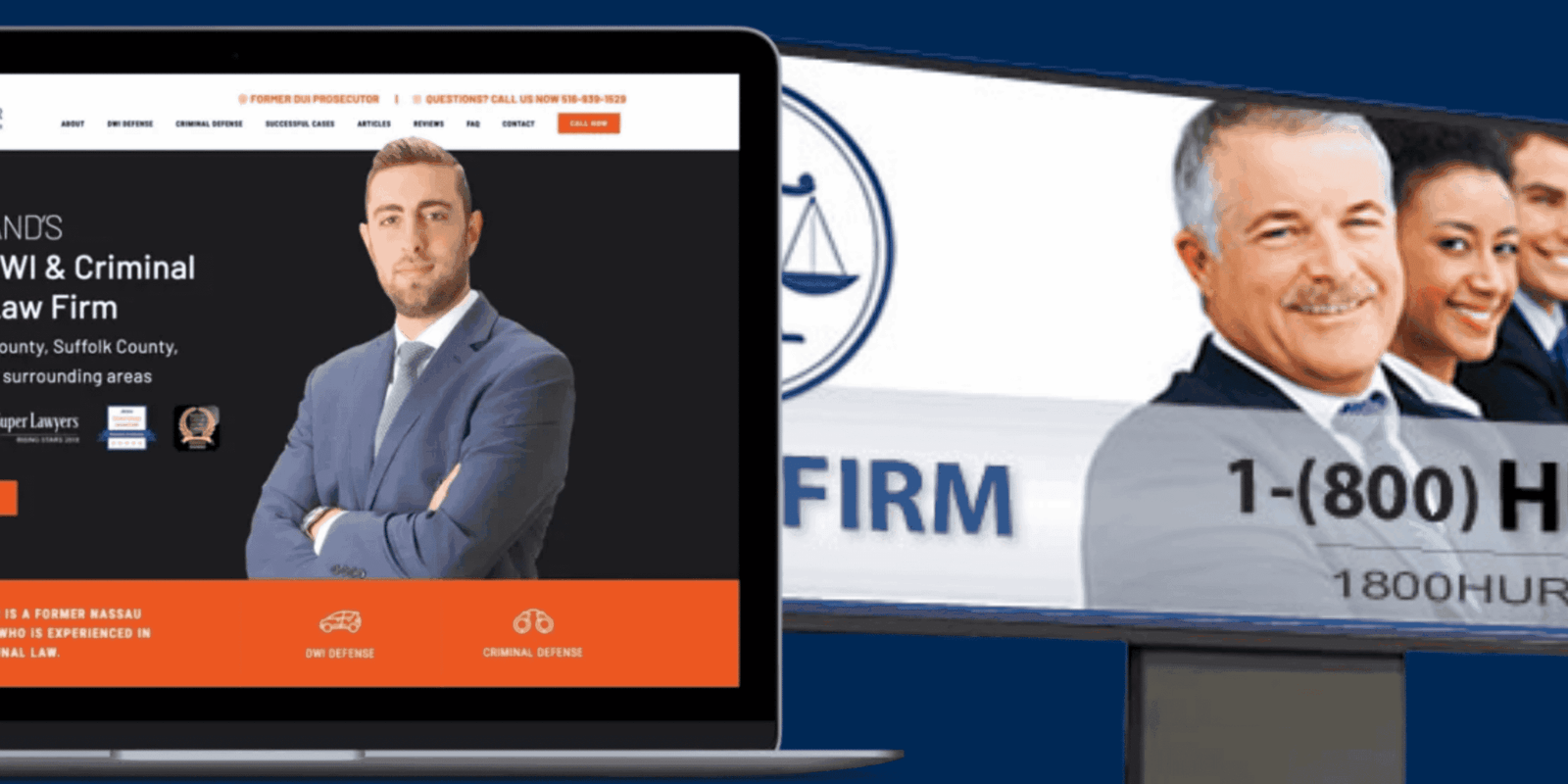
Billboards, bus benches, radio spots, sponsorships—these are familiar tools for law firms. They’re highly visible and can build recognition over time. But here’s the problem: they rarely capture intent. Someone driving past a billboard about a car accident lawyer isn’t necessarily injured. The same goes for ads about DWI or even divorce. Even if they remember your name, it may fade within minutes.
Traditional ads are great at one thing: reminding the public that you exist. They do not track performance clearly, do not allow instant interaction, and offer no way to follow up with people who showed interest. For attorneys seeking long-term brand recognition, traditional channels may still have a place. For firms that want immediate signed clients, they fall short.
Law Firm Internet Marketing: Built for Action
Online marketing changes the game. It places law firms directly in front of prospects who are ready to act. That makes digital campaigns inherently more conversion-focused. Whether through SEO or paid campaigns, online channels capture people who are actively seeking legal help.
Here is how internet marketing outperforms traditional media for law firms:
- Search intent – Queries like “DWI lawyer near me” or “slip and fall attorney today” show direct, urgent need for representation. Traditional ads can’t target that level of intent.
- Geotargeting – Google Ads, LSAs, and social platforms let you reach only the neighborhoods, zip codes, or even demographics that matter. A billboard can’t choose who sees it; digital ads can.
- Speed of response – Online campaigns can be launched, paused, or adjusted instantly. If a new competitor enters the market or you want to increase leads after a big verdict, you can scale ads the same day.
- Performance data – Digital platforms track calls, form fills, clicks, and even signed retainers. That data shows exactly what’s working and allows campaigns to get more efficient over time.
Instead of shouting to the entire city, internet marketing speaks quietly to the right person at the right moment.
Cost Efficiency: Measured vs. Guessed Results
Traditional advertising requires large upfront spends with no guaranteed return. Once a billboard is up or a radio slot is paid for, that money is gone—whether the phone rings or not.
Internet marketing is measurable. Attorneys can see which keywords triggered calls, which pages drove the most signed cases, and what percentage of site visitors converted. That data allows campaigns to improve over time. A traditional billboard cannot be edited after printing. Online ads can be adjusted at anytime.
The Winning Formula for Law Firms
For attorneys in competitive practice areas and markets, internet marketing is the only channel that consistently delivers qualified leads at scale. Traditional advertising, however, still plays a powerful role—not by driving immediate cases, but by creating recognition and trust. When someone injured in an accident or charged with a crime starts searching online, they’re far more likely to click on a name they’ve seen repeatedly on billboards, buses, or TV.
This is why firms like Diamond & Diamond dominate their markets: people feel they “already know them” because their ads are everywhere. That visibility translates into branded searches (e.g., “Diamond and Diamond lawyer”) and higher click-through rates on online ads. In other words, strong offline presence lowers online acquisition costs and boosts conversion rates.
The winning formula is clear: use digital marketing to capture high-intent leads, while using traditional advertising to build awareness that makes those leads easier and cheaper to convert. Online delivers the clients; offline ensures your firm is remembered when it matters most.
Digital Out-Of-Home: The Digital Evolution of Traditional Advertising
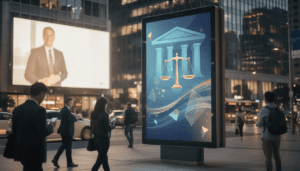
That said, traditional media itself is changing. Traditional billboards and transit ads have always been about visibility, but Digital Out-of-Home (DOOH) takes that visibility into the modern age. With DOOH, lawyers can buy ad placements on billboards, transit screens, mall screens, and other public displays the same way they buy Google or Facebook ads—through digital platforms that allow targeting, scheduling, and performance tracking.
Unlike old-school billboards, DOOH has:
- Targeted awareness – Ads can be displayed in specific neighborhoods or near hospitals, gyms, or commuter routes where accidents are more common.
- Flexible scheduling – Campaigns can run only during peak hours, weekends, or even be triggered by events (like weather conditions tied to slip-and-fall messaging).
- Digital integration – DOOH campaigns can be coordinated with online ads to create a surround-sound effect: prospects see the billboard, then search your name online, and finally click your Google Ad or website.
For law firms, Digital Out-Of-Home is the best of both worlds: the mass visibility of traditional advertising combined with the precision and measurability of digital marketing. It reinforces brand awareness while tying back into your online campaigns, helping you dominate both the streets and the search results.
Law Firm Internet Marketing That Converts
If your goal is more than exposure—if you want signed clients—you need to move beyond passive advertising into active, measurable lead generation. At KJ Strategy Group, we partner with law firms to build marketing systems that attract, capture, and convert the right cases. From high-intent search campaigns and AI visibility strategies to DOOH and traditional channels that amplify your brand, we help you dominate both online and offline. Stop guessing which ads work—start building a system designed for action, accountability, and growth.