
Author name: Kelon Jones

Kelon Jones is the founder and principal consultant at KJ Strategy Group. With more than 15 years of digital marketing experience, he helps law firms connect marketing strategy, intake technology and performance measurement to improve client acquisition.

Search Marketing

ChatGPT Ads Are Here: What Law Firms Need to Know About Advertising in AI Search

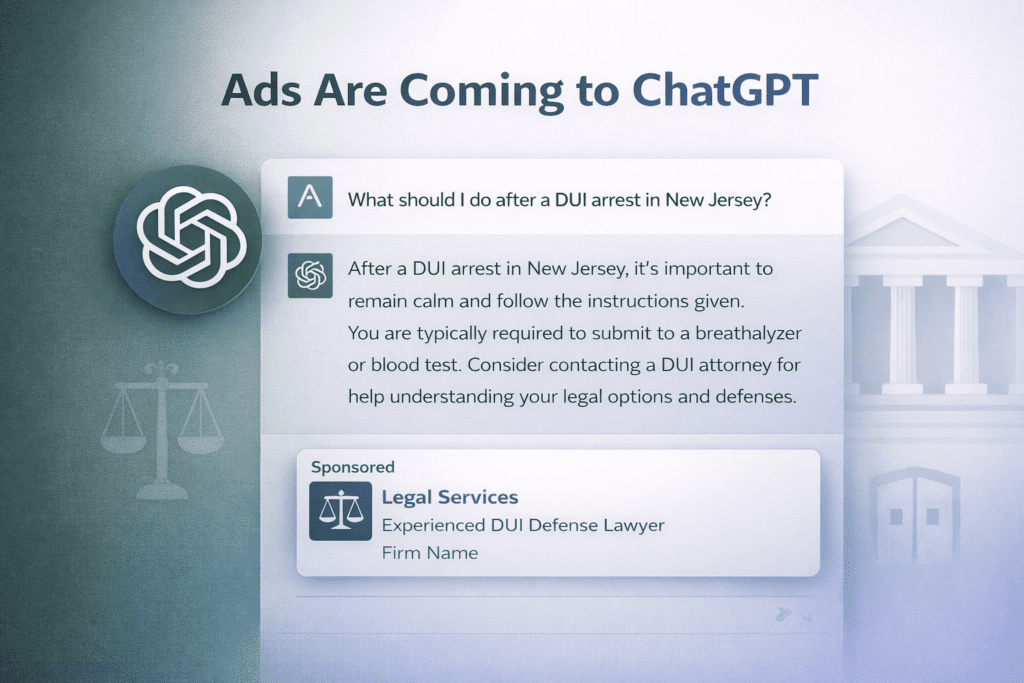
Key Takeaways Advertising inside AI-powered search introduces a new discovery channel—and a new set of questions for law firms. This article explains what ChatGPT Ads are, how the experience may differ from traditional search ads and what firms should evaluate before testing. It focuses on readiness, measurement and client fit rather than novelty. When ChatGPT Ads May Be Worth Testing When it makes sense: A test makes sense when the firm has access, a relevant audience and budget beyond its essential acquisition activity. When to reconsider: Reconsider it if results cannot be evaluated or the firm needs predictable short-term client volume. Treat this article as launch-era context and verify current product details before implementation. Who Will See ChatGPT Ads? During the initial rollout, ads will be shown to: Logged-in adult users in the United States Users on the Free and Go subscription tiers Higher-tier plans—including Plus, Pro, Business, Enterprise, and Education accounts—will remain ad-free. ChatGPT’s responses are generated independently and are not influenced by advertisers. OpenAI has stated that it does not sell user chat data to advertisers and that advertisers receive only aggregated reporting. What Are ChatGPT Ads? ChatGPT Ads are clearly labeled sponsored placements that appear below the AI’s response. Ads are not embedded within ChatGPT’s answers, and OpenAI has emphasized a strict separation between AI-generated content and paid advertising. Key characteristics: Ads appear after ChatGPT’s response Ads are contextual, based on the topic of the conversation Ads are limited to non-sensitive topics Paid plans remain ad-free Users may opt out of ad personalization based on chat data and can clear any data used for advertising purposes. Ads will not be shown to users under 18. An educational explanation of the legal process from ChatGPT Followed by a sponsored legal services ad displayed below the response May receive: How This Could Apply to Legal Searches For example, a user asking: “What should I do after a DUI arrest in New Jersey?” This differs from traditional search advertising because ads appear within a conversational research experience, rather than a keyword-based search results page. Why This Matters for Law Firms Legal marketing has consistently followed changes in how people seek information. Increasingly, consumers are using AI systems/assistants to ask questions such as: “Do I need a lawyer for this?” “How does divorce mediation work?” “What happens after a criminal charge?” “Can a xyz record be expunged?” These are early-stage, high-intent questions, and ChatGPT is becoming a common starting point for this type of research. ChatGPT Ads introduce a scenario where: Law firms may appear earlier in the research process Visibility may occur before a user conducts a Google search AI tools begin to influence how law firms are discovered How ChatGPT Ads Differ From Google Ads ChatGPT Ads are not a replacement for Google Ads, but they function differently. Google Ads Keyword-driven Appear on search results pages Often target users who are ready to take action ChatGPT Ads Conversation-based Contextual rather than keyword-triggered Appear during the research and learning phase For law firms, this suggests a potential shift toward earlier visibility, rather than immediate lead capture. Ethics, Trust, and Legal Advertising Considerations Legal advertising is highly regulated, and OpenAI’s ad framework reflects this sensitivity: Ads are excluded from certain sensitive categories Sponsored content is clearly labeled User data is not sold to advertisers Reporting is aggregated, not user-specific Law firms advertising through AI platforms will still need to comply with: Applicable bar advertising rules Restrictions on misleading claims or guarantees Jurisdictional and practice-area limitations This environment favours clear, factual, and professional messaging. Which Practice Areas May See Early Relevance Practice areas that involve frequent educational questions may see relevance earlier, including: Criminal defense Family law Immigration law Estate planning Early-stage personal injury inquiries These areas commonly involve users seeking guidance before deciding whether to contact a lawyer. How Law Firms Can Prepare Even if ChatGPT Ads are not immediately available to most law firms, preparation can begin now. Focus areas include: Creating clear, educational website content Publishing well-structured FAQs and practice area pages Clearly defining practice areas, jurisdictions, and services Emphasizing accuracy and clarity over marketing language These steps support both organic AI visibility and future advertising efforts. What to Measure Through to Signed Clients Record campaign spend, inquiries, lead quality, consultations and signed clients using the measurement options actually available to the account. Reconcile ad-platform reports with intake records and identify gaps. Compare cost per signed client and collected revenue with other tests, allowing time for prospects to make a decision. Your Next Step Discuss whether AI advertising fits your marketing plan.

Google Ads for Lawyers
Search Marketing

Google Ads for Lawyers — Without the Tech Talk

Google Ads for Lawyers — Without the Tech Talk Key Takeaways Google Ads can place a firm in front of someone actively seeking legal help, but the platform is easy to overspend on. This plain-English guide explains how the system works, what makes a legal campaign viable and where common breakdowns occur. It shows which questions to resolve before increasing budget. When Google Ads Makes Sense—and When It May Not When it makes sense: Paid search makes sense when people search for your service, your firm can afford a meaningful test and someone can respond to inquiries. When to reconsider: Reconsider launching broad campaigns if the budget is too thin, the landing page is unclear or lead tracking is unreliable. Start with a defined practice area and market. What Is Google Ads (in Plain English)? Google Ads is the platform that lets you pay to show up at the top of Google search results. If someone types “divorce lawyer near me,” you can appear above the organic listings, even before the maps. Google Ads allows your law firm to appear at the very top of search engine results pages (SERPs)—the pages users see after entering a query into a search engine like Google. This means your ad can be displayed above the organic search engine results, giving your firm maximum visibility. These ads are triggered by relevant google searches performed by users. Law firms can choose between different types of google ad campaigns, such as search campaigns and display network campaigns, to reach potential clients. Display ads can appear across the Google Display Network, which includes a wide range of websites and mobile apps, making it effective for brand awareness and retargeting campaigns. Since Google is the most widely used search engine, this is a powerful way for lawyers to reach potential clients right when they are searching for legal services. You only pay when someone clicks your ad. It’s like renting the best billboard in town — but only being charged when someone walks in your office because of it. Why Google Ads Works for Law Firms When people need a lawyer, they don’t wait around. They go to Google. Google Ads allows your law firm to reach potential clients at the exact moment they are searching for legal help. That’s why search ads work so well — they connect your law firm with people already looking for help in your practice area. Here’s why Google Ads is a game-changer: Immediate visibility: Skip the long wait for SEO or referrals. Highly targeted: Show up for searches like “DWI lawyer in [Your City]” or “child custody attorney.” Control your budget: Start small, scale when it works. Compelling ads: Creating compelling ads with clear calls-to-action helps your law firm stand out from competitors and attract more clicks. If you’re running a criminal defense, family law, personal injury, or estate planning practice, Google Ads and these PPC marketing strategies are essential for your law firm’s growth and client acquisition. Family law firms can find a deeper walkthrough in our guide to Google Ads for family law firms. How Much Does Google Ads Cost for Lawyers? Let’s talk dollars. On average, law firms pay anywhere between $5 to $75 per click, depending on the competition in your area and practice area. Managing your ads budget is crucial for effective PPC advertising, especially in highly competitive fields like personal injury lawyers, where costs per click can be significantly higher. Strategic allocation of your ads budget, focusing on relevant keywords and using negative keywords, helps maximize your return on investment. Careful budget management and campaign optimization are essential for making the most of your law firm’s advertising spend. Here’s a quick cheat sheet: Practice Area Typical Cost per Click Monthly Starting Budget Criminal Defense $10 – $40 $1,500 – $3,000 Divorce / Family Law $8 – $30 $1,000 – $2,500 Personal Injury $50 – $150+ $3,000 – $10,000+ Estate Planning $5 – $20 $750 – $2,000 Practice Area Typical Cost per Click Monthly Starting Budget Criminal Defense $10 – $40 $1,500 – $3,000 Divorce / Family Law $8 – $30 $1,000 – $2,500 Personal Injury $50 – $150+ $3,000 – $10,000+ Estate Planning $5 – $20 $750 – $2,000 Note: You don’t need to be the biggest spender. You just need to be smarter with targeting and tracking results. Also, keep in mind that display ads based on targeted keywords may have different cost structures compared to search ads. How Many Leads Can You Expect from Google Ads? Here’s a rough idea of what you can expect from a $2,000 monthly budget: Clicks: 100–200 Calls or form submissions: 15–30 Signed clients: 3–8 (depending on your intake process) But it’s not just about the numbers. It’s about getting in front of the right people at the exact moment they’re searching for your services. By using targeted keywords and making sure to target specific keywords relevant to your legal services, you ensure your ad appears in front of the most relevant audience, increasing the likelihood of quality leads. How to Set Up a Google Ads Campaign (No Tech Degree Needed) Getting started with Google Ads doesn’t require a computer science degree—just a little know-how and a clear plan. First, set up your Google Ads account. Once you’re in, you’ll choose the type of campaign you want to run. For most law firms, search ads are the best place to start, since they put your firm right in front of people searching for legal services. Next, decide on your ads campaign budget. You’re in control here—set a daily or monthly limit that fits your comfort zone. Now comes keyword research. Use tools like Google Keyword Planner to find relevant keywords and specific keyword phrases, including long-tail keywords and exact match options, that your prospective clients are actually typing into Google. Consider using both broad match and exact match keyword types to balance reach and targeting. Think about the questions or problems your target audience has, and build

Scroll to Top