
Google’s New Measurement Tools: What Law Firms Need to Know
Google is making it easier to connect advertising activity with qualified leads, signed clients and revenue. Here is what law firm leaders should review.

Google is making it easier to connect advertising activity with qualified leads, signed clients and revenue. Here is what law firm leaders should review.
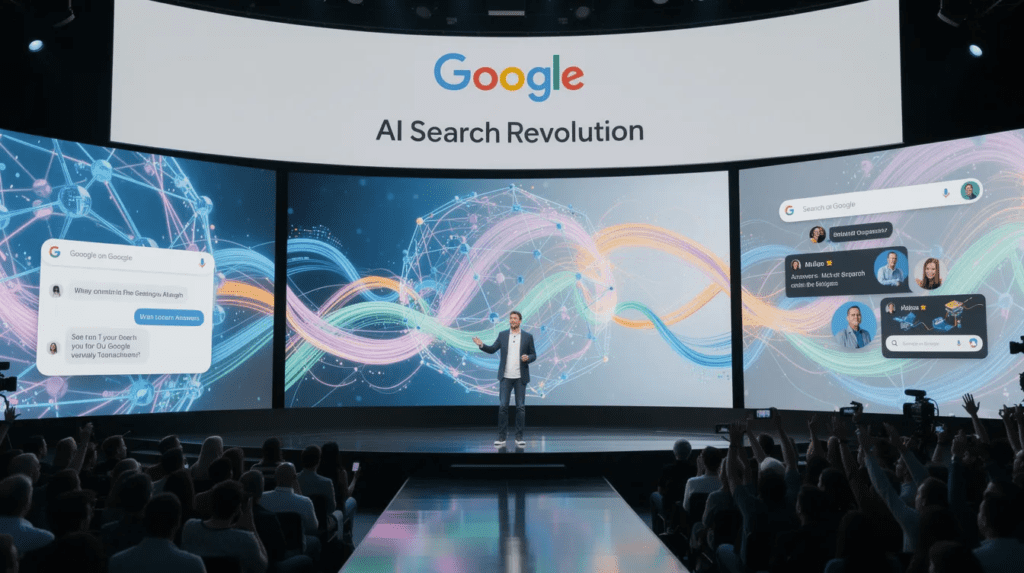
Key Takeaways Google’s expansion of AI search changes where answers appear and how prospects may discover a law firm. This article breaks down the announcement in plain language and examines what it could mean for legal marketing. It separates immediate preparation from features and behaviours that still need to be observed. The Biggest Shift: From “Search Engine” to “Answer Engine” Google introduced major upgrades to AI Mode and AI Overviews, powered by Gemini AI. The search experience is becoming more conversational and personal – allowing users to ask more complex questions instead of short keyword searches, and not always needing to do multiple searches to resolve nuanced topics. Instead of typing: “child custody lawyer NJ” users may now ask: “What should a father do if he believes the mother is violating a custody agreement in New Jersey?” Google uses a query fan-out process to break that query into subtopics, search them all at the same time, and combine the findings into a clear response. Google’s AI features are increasingly going to generate structured summaries at the top of the results page – often using headers or bullet points, including: direct answers, summaries, recommendations, follow-up prompts, and contextual suggestions before users even click a website. For law firms this means content strategy has to evolve beyond just simple keyword targeting. AI Mode can also preserve context for follow-up questions within the same session. What Law Firms Need to Do Law firms need to start producing content that answers real-world questions from potential clients searching for legal services in natural language. This includes: creating FAQ-style legal content writing conversational blog articles detailed practice area pages structured Q&A sections video explainers attorney thought leadership content Long-form blog articles can improve organic traffic and help attract new clients. Effective legal marketing is a combination of SEO with other techniques such as website optimisation, social media and networking. Google’s AI systems are prioritising content that demonstrates expertise, authority, trustworthiness, and clarity. Legal topics fall under Google’s “Your Money or Your Life” (YMYL) framework – meaning trust and credibility matter even more in AI-generated search experiences, and keyword research should focus on the relevant terms people actually use. AI Overviews Will Reduce Organic Clicks One of the biggest concerns for publishers and marketers is the rise of AI Overviews. Google is increasingly answering questions directly inside search results, and AI Overviews provide concise snapshots that summarise topics before users click through – reducing the need for users to visit websites to discover basic answers. For law firms, this creates both a challenge and an opportunity. These responses can also include direct source links within the answer – giving users immediate access to supporting content. If your firm is included in these features, it can increase visibility with potential searchers. The Challenge Informational legal searches may generate fewer website visits because users can get summarised legal guidance directly from Google. Examples: “How long does divorce take in NJ?” “What is a restraining order?” “Can I refuse a breathalyzer?” “What happens after a DUI arrest?” The Opportunity Law firms that become trusted citation sources inside AI-generated answers will gain enormous visibility and authority. This means law firms now need to optimize content not just for rankings – but for AI citation inclusion. Google’s New AI Ad Formats Could Reshape Legal Marketing and Lead Generation One of the biggest announcements from Google’s keynote was the unveiling of entirely new AI-powered ad experiences designed specifically for conversational search behavior. For law firms, these formats could help attract new clients by matching ad messages more closely to real search intent. They may also help generate leads when campaigns connect useful offers with the right audience at the right moment. Google is no longer thinking about ads as static text placements triggered by exact-match keywords. PPC still requires a clear plan around relevant keywords and geographic targeting for legal services. Instead, ads are becoming: contextual, conversational, dynamically generated, and AI-assisted. The screenshots Google shared during the keynote provide a glimpse into what the future of search advertising may look like. Firms will still need to track performance and adjust campaign spend over time to protect ROI. 1. Conversational Discovery Ads Google introduced a new format called Conversational Discovery Ads, where ads are dynamically generated based on a user’s natural-language question. In the example Google shared, a user searches: “Low-maintenance ways to make my home smell like a spa.” Instead of showing traditional product ads, Google’s AI generates a recommendation-style sponsored experience complete with: product summaries, AI-generated explanations, images, and contextual recommendations. Another example showed AI-generated sponsored recommendations for smart home fragrance devices, where Gemini summarized: product benefits, user experience, ideal use cases, and key differentiators. For law firms, imagine a future search like: “I need help after getting arrested for DUI in New Jersey and I’m worried about losing my license.” Google’s AI could potentially generate: a summarized explanation, attorney recommendations, legal guidance, options or ideas for next steps, and sponsored law firm placements tailored specifically to the user’s situation. This is a major evolution from the traditional: keyword → text ad → landing page model. Law firms will likely need: stronger topical authority, better educational content, richer first-party data, and AI-friendly website structures they can develop further to compete in this environment. 2. Highlighted Answers Ads Another major format Google introduced is called Highlighted Answers. These ads appear directly inside AI-generated recommendation lists and answer panels. Google showcased an example where Duolingo appeared within an AI-generated recommendation experience. The ad did not resemble a traditional PPC ad. Instead, it looked more like a trusted recommendation complete with: summarized benefits, bullet-point highlights, contextual explanations, and AI-generated supporting information. This is extremely important for legal marketers. Imagine someone searching: “What’s the best way to handle a child custody dispute?” Instead of seeing only blue links and standard search ads, Google may surface: educational AI summaries, attorney recommendations, law firm comparisons, and sponsored “Highlighted Answers.” The law firms that provide: authoritative educational content,
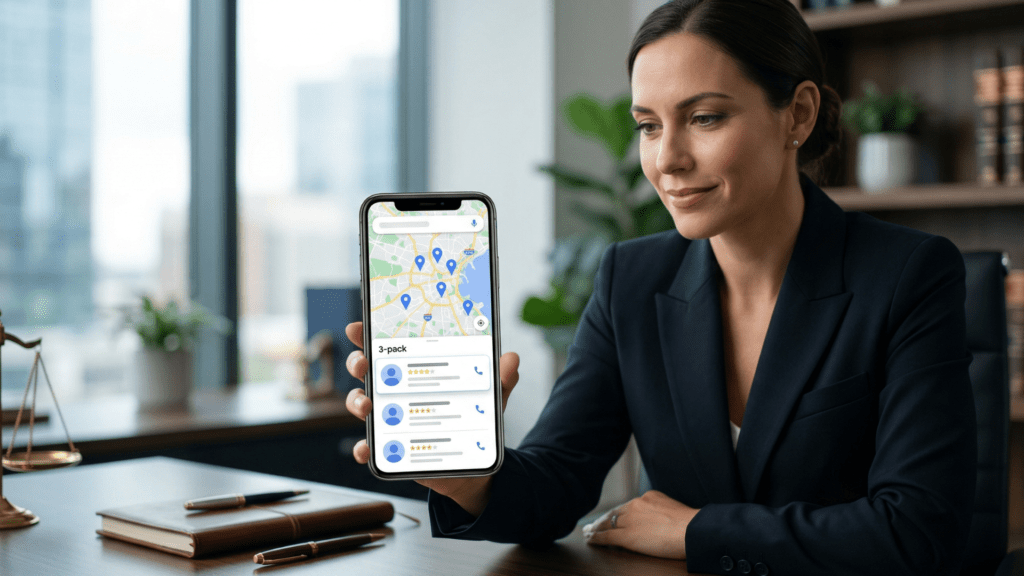
Key Takeaways For many local legal searches, the Google map results appear before traditional organic listings. This guide explains the signals that influence Local Pack visibility and the common weaknesses that hold firms back. It also connects local rankings with reviews, landing pages and the inquiry experience. What Is the Google Local Pack? The Google Local Pack (also called the “Map Pack,” “3-Pack,” or “Google Local Map Pack”) is a set of three local business listings that appear in Google search results for location-based queries. It typically includes: A map with pinned business locations Three business listings Business name, reviews, rating Address and phone number Hours of operation A link to the website A “Directions” button These are Google listings and local listings that provide essential contact details for each business, making it easy for users to connect with local service providers. These listings are pulled from Google Business Profiles (GBP), not traditional website rankings. The Local Pack is a prominent feature of local SERPs (search engine results pages) and plays a key role in how users find local businesses. Why the Local Pack Matters for Law Firms 1. It Dominates Above-the-Fold Real Estate The Local Pack often appears above organic search results, meaning users see it first. If your firm isn’t there, you’re losing visibility to competitors—no matter how strong your website SEO is. Ranking in the Google Local Pack can also drive more foot traffic and business in the offline world, as its prominent placement on search engine results pages influences local consumers’ decisions to visit or contact your firm. 2. High-Intent Traffic Searches that trigger the Local Pack are usually high intent, such as: “DWI lawyer near me” “personal injury attorney New York” “family lawyer free consultation” Many of these searches come from mobile users seeking quick solutions, and appearing in the Local Pack can significantly increase local traffic to your firm. These users are actively looking to hire—not just browsing. 3. Calls and Leads Without Website Clicks Users can: Call your firm directly Get directions Read reviews This means you can generate leads without even needing a website visit. 4. Trust Is Built Instantly The Local Pack prominently displays: Star ratings Number of reviews Having a high number of positive customer reviews and positive reviews is a key factor in building trust and significantly improving your chances of appearing in the Local Pack. Online reviews are a critical trust signal for both Google and potential clients. A firm with 4.8 stars and 150+ reviews will almost always outperform a firm with little to no social proof. How the Google Local Pack Ranking Works Google uses three primary factors to determine which businesses appear: Local search ranking is determined by a combination of factors, and a business’s local ranking in the Local Pack can fluctuate based on these. Monitoring your local pack rankings is important for understanding your firm’s visibility in local search results. While many factors influence ranking, there is no way to pay for or request a better local ranking—Google keeps its search algorithm details confidential to ensure fairness. The search algorithm details are proprietary and confidential, so it’s best to focus on proven SEO best practices to improve your business’s local ranking. 1. Relevance How well your business matches the search query. Google considers how relevant your business is to what the user is searching for. This means your business category, description, and services should closely align with the search intent. Using relevant keywords in your business profile and website content helps Google match your business to local search queries. Make sure to include terms that are specific to your local area and target audience to improve your chances of appearing in the Google local pack. 2. Distance How close your business is to the searcher’s location. Google considers your physical location and proximity to the searcher when determining which businesses to display, often showing nearby business listings in the Google Local Pack. 3. Prominence How well-known and trusted your business is online. Prominence is determined by how well your law firm is recognized both online and offline. Google considers factors like the number of reviews, review scores, and your firm’s overall reputation across the web. Including detailed information about the services offered in your Google Business Profile and maintaining well optimized GBP listings can also boost your firm’s prominence in local search results. Consistent citations, quality backlinks, and positive media mentions all contribute to higher prominence, helping your firm appear more frequently in the Google Local Pack. Local Intent and Search Results Local intent is at the heart of how Google delivers relevant results to users searching for services in their area. When a user makes a search query with local intent—such as “divorce lawyer near me” or “estate planning attorney downtown”—Google’s algorithm works to identify businesses that are not only nearby but also closely match the user’s needs. This is where the Google Local Pack comes into play, displaying three local business listings that best fit the search query and the user’s location. For law firms and other local businesses, optimizing for local intent means ensuring your Google Business Profile is complete, accurate, and up-to-date. Your business information—such as address, phone number, business hours, and services—should be consistent across all platforms. Additionally, using local keywords in your business profile and throughout your online presence helps Google understand exactly what services you offer and where you’re located. By aligning your business profile with the types of search queries your potential clients are making, you increase your chances of appearing in the coveted local pack and connecting with more local clients. Local Keywords and Search Results Local keywords are essential for boosting your visibility in local search results and attracting more local customers. These are search terms that combine your services with specific locations, such as “personal injury lawyer Toronto” or “Italian restaurant in Raleigh.” When you incorporate local keywords into your website content and Google Business Profile, you help Google’s algorithm recognize

Key Takeaways Personal injury firms compete across both high-intent searches and long-term brand recognition. This article reviews how awareness, search, content and intake can work together across the client journey. It helps firms think beyond individual tactics and evaluate the full path to a signed case. Introduction to Marketing for Personal Injury Law Firms Marketing for personal injury law firms is a highly competitive and specialized endeavor. Unlike general legal marketing, personal injury lawyer marketing requires a deep understanding of both the legal industry and the unique needs of individuals seeking legal representation after an accident or injury. The goal is to connect personal injury lawyers with those in need of legal services, often at a critical and stressful time in their lives. To stand out, law firms must leverage a variety of marketing channels—both online and offline—to showcase their expertise, build trust, and attract clients. Effective marketing for personal injury law involves a mix of paid advertising, search engine optimization (SEO), social media marketing, content creation, and strategic networking. By utilizing multiple marketing channels, personal injury law firms can increase their visibility, engage with their target audience, and position themselves as the go-to choice for legal representation in personal injury cases. A successful personal injury lawyer marketing strategy is not just about generating leads; it’s about building a reputation for compassion, expertise, and results. This multi-faceted approach ensures that when someone needs a personal injury lawyer, your firm is top of mind. Understanding Personal Injury Clients and Personal Injury Law Personal injury clients are individuals who have suffered harm due to someone else’s negligence and are seeking compensation through legal representation. For personal injury law firms, understanding the motivations, concerns, and emotional state of these clients is essential for effective marketing. Most potential clients are navigating a stressful and unfamiliar process, so demonstrating empathy and a client-centered approach is key to building trust. Personal injury law covers a wide range of practice areas, including car accidents, medical malpractice, workers’ compensation, and more. Each area presents unique challenges and opportunities for law firms to showcase their expertise. Marketing for personal injury requires not only a deep knowledge of these legal areas but also the ability to communicate that expertise in a way that resonates with potential clients. By addressing the specific needs and pain points of personal injury clients—such as the desire for fair compensation, clear communication, and compassionate legal representation—law firms can differentiate themselves and build lasting credibility in the personal injury space. Setting Up a Law Firm Marketing Strategy Developing a successful marketing strategy for law firms begins with a thorough evaluation of current marketing efforts. Start by assessing your firm’s strengths and weaknesses, identifying what’s working and where there’s room for improvement. Next, define clear, measurable goals for your marketing efforts—whether that’s increasing lead generation, expanding your reach to a new target audience, or improving brand recognition. Establishing a realistic marketing budget is crucial. Your budget should support your marketing objectives without overspending, ensuring you can invest in the channels that deliver the best results for your firm. Finally, set up systems to track and measure the results of your marketing strategy. By monitoring key metrics and analyzing performance, law firms can make data-driven decisions, refine their approach, and maximize the return on their marketing investment. A well-structured marketing strategy provides a roadmap for reaching your target audience, generating qualified leads, and growing your personal injury practice. Creating a Brand Identity For personal injury law firms, a strong brand identity is essential to stand out in a crowded market and build trust with potential clients. Your brand identity should reflect your firm’s values, mission, and unique approach to personal injury law. This includes developing a professional logo, a memorable tagline, and a consistent brand voice that resonates across all marketing channels. Consistency is key—whether a potential client encounters your firm on your website, social media, or in a digital ad, the messaging and visual identity should reinforce your expertise and reliability in the personal injury space. Investing in branding services tailored to law firms can help create a cohesive and compelling online presence, making it easier for potential clients to recognize and remember your firm when they need legal representation. A well-defined brand identity not only differentiates your firm from competitors but also positions you as a trusted authority in personal injury law. Awareness Marketing for Personal Injury Law Firms Awareness marketing focuses on visibility and brand familiarity. Most people who eventually need a personal injury lawyer don’t know which firm they will call until the moment an accident happens. Firms that invest in brand awareness dramatically increase the chances that they will be the first name a potential client remembers. Awareness marketing also boosts online visibility, making it easier for potential clients to find the firm when searching online. Trust and familiarity are built over time, and maintaining relationships with existing clients can further enhance brand recognition and generate referrals. Digital Out-of-Home (DOOH) Digital out-of-home advertising includes digital billboards, screens in gas stations, elevators, transit hubs, gyms, restaurants, and retail environments. For personal injury law firms, this channel works particularly well because it targets drivers, commuters, and people moving through the community, many of whom may eventually become accident victims or know someone who needs legal help. Advantages of DOOH include: High visibility in local markets Geographic targeting Frequent exposure to commuters Strong brand recall DOOH can also be integrated into larger advertising campaigns, reinforcing brand messaging across multiple touchpoints and supporting a cohesive personal injury marketing strategy. A firm can place ads near high-traffic highways, intersections with frequent accidents, hospitals, or urban centers. Repetition is key—seeing the same firm multiple times builds trust and familiarity. Many modern DOOH networks now allow ads to be purchased programmatically, giving firms the ability to: Control budgets dynamically Run campaigns in specific neighborhoods Schedule ads during peak commuting hours Over time, DOOH helps establish a firm as a recognizable name in the community, which can significantly increase conversion

Key Takeaways Employment-law prospects search with different needs, urgency and case value—and generic marketing can attract the wrong inquiries. This guide examines the strategy, channels and intake considerations that help employment firms generate better-fit opportunities. It also looks at what firms should measure beyond raw lead volume. This guide explains how employment lawyers can combine awareness, demand generation, intake and measurement into one client-acquisition system. At a glance: Build trust: Publish useful guidance on workplace issues and make the firm’s experience easy to verify. Capture demand: Use SEO, paid search and local visibility to reach people already looking for legal help. Improve follow-up: Make calls, forms and chats easy to complete and route every inquiry promptly. Measure quality: Evaluate qualified inquiries, consultations and signed clients—not clicks or raw lead volume alone. Audience strategy matters. An employee-side firm focused on wrongful termination, discrimination or wage disputes needs different messaging, content and intake questions than an employer-side firm advising businesses on policies, investigations and litigation. Firms that serve both audiences should separate their campaigns and landing pages so prospects immediately understand whether the firm handles their type of matter. The tactics below are organized around two roles: awareness, which builds visibility and trust before a prospect is ready to contact counsel, and lead generation, which captures existing demand. Like most effective legal marketing strategies, employment law firm marketing can be divided into two key categories: Awareness – building brand visibility and trust among working professionals before they need a lawyer. Lead Generation – capturing individuals actively searching for legal help. Below are some of the most effective marketing tactics for employment law firms within these two categories. What Makes Employment Law Marketing Different? Employment-law prospects are often dealing with sensitive, time-dependent situations. Useful marketing should answer the first questions they are likely to have, explain what information the firm needs, and provide a clear next step without promising an outcome. For employer-side practices, the audience and buying process are different: the decision-maker may be an owner, executive, human-resources leader or in-house counsel. That usually calls for different content, targeting and consultation pathways than employee-side campaigns. Awareness Marketing for Employment Law Firms Awareness marketing helps position a law firm as a trusted authority on workplace rights. Since many employment disputes develop over time, potential clients may spend weeks or months researching their options before contacting a lawyer. By investing in awareness campaigns, employment law firms ensure that their brand is visible during this research phase. Key marketing channels for building brand visibility include websites, social media, digital ads, videos, articles, and participation in local events. Many firms partner with employment law marketing services to maximize their reach and effectiveness during the awareness phase. Digital Out-of-Home (DOOH) Digital out-of-home advertising allows employment law firms to reach professionals in high-traffic environments throughout major cities. Unlike traditional billboards, digital out-of-home screens appear in a variety of environments such as: Office building elevators Corporate lobby displays Co-working spaces Transit stations Gyms Restaurants Shopping centers For employment law firms, some of the most effective placements include office buildings and business-focused environments. For example, firms can place ads in: Elevators of office towers Lobby screens in corporate buildings Business lounges in major airports These locations are particularly valuable because they reach professionals and business travelers, many of whom are actively engaged in their careers and may be experiencing workplace challenges. Advertising messages can focus on issues such as: Workplace discrimination Wrongful termination Harassment in the workplace Unpaid wages or overtime Because DOOH advertising delivers repeated exposure to professionals commuting to work, it can help position the law firm as a recognized authority on employee rights in the local market. Maintaining consistent branding across all digital out-of-home placements is essential to reinforce recognition and ensure your campaigns remain effective over time. LinkedIn Ads LinkedIn is arguably the most important awareness platform for employment law firms. Unlike other social networks, LinkedIn is a professional platform where users actively consume content related to: Career advancement Workplace challenges Leadership Employment trends Professional development This makes it an ideal environment for employment law firms to distribute educational and career-related content. One of the most effective approaches is to promote gated content, such as: Guides to employee rights Workplace discrimination checklists What to do if you were wrongfully terminated Severance negotiation tips Legal rights for remote workers Salary transparency and wage rights Users who download these resources can provide their email addresses, allowing the firm to build a list of potential employment law clients who may need legal help in the future. LinkedIn also allows firms to target users based on: Job title Industry Company size Seniority level Location For example, an employment law firm may choose to target: Mid-level professionals Corporate employees Technology workers Healthcare professionals Finance professionals Because many employment law cases involve high-income professionals, LinkedIn provides a powerful way to reach the right audience. Targeted LinkedIn campaigns can help firms attract more employment law clients by reaching professionals likely to need legal assistance. Reddit Ads Reddit has become an increasingly valuable platform for reaching people seeking advice about workplace issues. Many Reddit communities focus on topics such as: Workplace conflicts Career advice Labor rights Toxic work environments Salary negotiations Corporate culture These communities often address specific legal concerns related to employment, providing a space for users to seek guidance on nuanced workplace legal issues. Some subreddits regularly feature discussions around issues like: Being unfairly terminated Workplace harassment Wage theft Employment contracts Severance negotiations Reddit Ads allow law firms to target specific communities where these conversations are happening. Unlike traditional advertising platforms, Reddit users tend to respond better to educational or advisory messaging rather than direct promotional content. Effective Reddit campaigns often include messaging such as: “Know your workplace rights.” “What to do if you were wrongfully terminated.” “Understanding your employee protections.” By participating in these conversations through advertising and educational resources, employment law firms can position themselves as helpful experts rather than aggressive marketers. Search Engine Optimization Search engine optimization (SEO)

AI search optimization helps law firms become easier for ChatGPT, Google AI and other answer engines to discover, understand and cite. This practical guide covers crawl access, expert content, entity signals, external corroboration and measurement.

Introduction: Search Has Changed—and Family Law Firms Feel It First Key Takeaways Prospective clients now discover firms through paid ads, traditional search and AI-generated answers—often within the same decision journey. This guide examines how SEO, GEO and PPC can support one another instead of operating as separate programs. It shows what an integrated search strategy needs in order to influence qualified inquiries and signed clients. When an Integrated Search Strategy Makes Sense When it makes sense: A coordinated search approach makes sense when your firm has several discovery channels or providers working toward the same growth goal. When to reconsider: Reconsider launching every channel at once if budget, content capacity or measurement is limited. Prioritize the gaps most likely to affect suitable client opportunities. What Is OmniSearch? OmniSearch is a holistic approach to digital visibility. Instead of treating SEO, PPC, and AI search as separate tactics, OmniSearch aligns them into a single strategy focused on how people actually search today. The goal is simple: A unified marketing campaign ensures your law firm is present for the most relevant search queries across search engine results pages, maximizing search traffic from prospective clients. Be present at every meaningful search touchpoint—before, during, and after a client decides to hire a lawyer. OmniSearch acknowledges that: Some clients are ready to hire now Others are researching quietly for months Many turn to AI, forums, and videos before ever calling a firm Family law decisions are rarely impulsive—but when urgency hits, visibility matters instantly. That’s why SEO, GEO, and PPC must work together. Pillar 1: SEO – The Long-Term Authority Engine SEO remains the backbone of any serious digital marketing strategy for family law attorneys. But its role has evolved. Today, law firm SEO, lawyer SEO, and SEO for law firms are specialized strategies tailored for legal practices. A comprehensive law firm SEO strategy is essential for long-term growth, helping law firms build authority, attract qualified leads, and convert them into clients. SEO is no longer just about traffic—it’s about credibility, education, and discoverability across platforms, including AI tools. SEO work now encompasses technical SEO, on page optimization, and effective link building as foundational elements for improving search engine rankings and visibility in search engine results. These efforts ensure your law firm’s website is optimized for both users and search engines. Core SEO assets include thorough keyword research to identify relevant keywords, keyword phrases, long tail keywords, and a targeted keyword strategy. These are essential for optimizing content and attracting organic search traffic from potential clients searching for legal services in your practice areas and locations. Organic search and high rankings in organic search results on search engine results pages (SERPs) are critical for law firms. Achieving top positions in SERPs not only drives website traffic and brings in more website visitors, but also enhances your law firm’s reputation, as high rankings are perceived as endorsements of authority. Content marketing is a key component of law firm SEO. Regularly publishing informative blog posts, maintaining a comprehensive faq page, and creating other content formats that answer common legal questions help establish your firm’s authority and attract organic traffic. This approach builds trust with potential clients and supports your overall SEO success. Technical SEO is a measure of how ‘Google-friendly’ your law firm’s website is. It includes optimizing meta descriptions, monitoring core web vitals for page speed and responsiveness, implementing structured data, and maintaining an up-to-date XML sitemap. Ensuring your website is mobile-friendly and fast-loading is essential, as search engines penalize slow or poorly structured sites. A well-structured website with easy navigation enhances user experience and can lead to higher conversion rates. Using third party tool and analytics tools to track website performance, website traffic, and SEO success is crucial. Monitoring these metrics allows law firms to understand the effectiveness of their SEO efforts and make data-driven adjustments. Link building, including acquiring referring links and citations from other websites, is vital for improving your site’s authority and search engine rankings. Effective link building strategies such as directory listings, guest posting, and outreach to reputable sources can significantly boost your SEO results. While Google is the dominant search engine, optimizing for other search engines like Bing and others can further expand your online visibility. The structure of your law firm’s website and individual web pages should prioritize easy navigation and user experience. Technical SEO ensures your site is mobile-friendly, fast, and easy to navigate, which are critical for both user satisfaction and search rankings. Developing SEO skills internally or hiring an experienced SEO consultant can help ensure your SEO efforts are effective and aligned with industry best practices. Finally, user behavior on the search results page—such as clicks, time spent, and engagement—can influence your rankings. Monitoring and analyzing SEO performance metrics is essential for ongoing SEO success and adapting to changes in search engine algorithms. What SEO Does Best for Family Law Firms Captures Research-Based SearchesMany potential clients aren’t ready to call a lawyer yet. They search questions like: “How does child custody work?” “Is mediation better than divorce court?” “What happens if my spouse won’t cooperate?” SEO allows your firm to show up early—before competitors even know the client exists. By optimizing for specific search queries, your firm can appear in the most relevant search results and search engine results, increasing the chances of being discovered by potential clients. Builds Trust Through EducationFamily law clients are scared, confused, and emotional. High-quality educational content builds familiarity long before the first consultation. Understanding user intent behind keywords is crucial for selecting the right keywords to target in your SEO strategy, ensuring your content addresses the real needs of your audience. Feeds AI Search SystemsAI tools rely heavily on well-structured, authoritative web content. Strong SEO makes your site more likely to be referenced, summarized, or cited by AI engines. Core Law Firm SEO Assets for Family Law Attorneys Practice area pages (Divorce, Custody, Support, Mediation, Domestic Violence) Local SEO and Google Business Profile optimization FAQ-style blog content answering real client

Key Takeaways Legal marketing channels rarely fail in isolation; problems often appear where strategy, execution, intake and measurement disconnect. This guide examines the digital tactics that can matter in 2026 and how they should work together. It helps firms decide what deserves attention without chasing every platform. Google Ads, LSAs, SEO or Referrals: Where Should a Law Firm Start? Start with the gap that limits suitable client acquisition. If the firm needs more relevant inquiries and can fund a focused test, evaluate paid search or eligible Local Services Ads. If useful pages are missing or hard to find, invest in the website and organic visibility. If trusted professional relationships already produce suitable matters, give referral development a clear owner and time allocation. If suitable inquiries already arrive but rarely become clients, review the conversion gaps first. There is no universal first channel or fixed budget split. Choose based on practice area, location, urgency, available cash and the team’s capacity to respond. Compare the Four Starting Options Option When it fits What you fund and prepare When to reconsider Google Search Ads People actively search for your service, and you want to test a defined offer and market. Media, management, a relevant landing page, call/form tracking and timely responses. Results still depend on the auction and conversion quality. The budget cannot support a meaningful test, the offer is broad or suitable inquiries are being missed. Local Services Ads Your service and location are eligible, you can complete Google’s requirements and your team can handle incoming inquiries. Valid-lead charges, profile maintenance, lead review and outcome tracking. Check current eligibility and onboarding requirements. The firm is ineligible, unavailable to respond or assuming that every charged lead will meet its own case criteria. SEO and useful website content The firm needs clearer service pages, stronger local relevance and ongoing discovery through search. Technical improvements, content, maintenance and time to assess progress. Organic traffic has production costs even without a per-click fee. You need a predictable number of clients immediately or are being sold guaranteed rankings. Referral relationships Existing clients or professional contacts understand the work you accept and can make relevant introductions. Time to maintain genuine relationships, communicate the firm’s focus and follow up on inquiries. This comparison concerns relationship development, not paid referral arrangements. A small number of sources creates dependency or the expected introductions cannot support the firm’s growth target. Google explains that LSA availability and requirements depend on the service and location, and that advertisers pay for valid leads. A valid lead is not a guaranteed signed client. Google’s SEO guidance also notes that changes can take time to appear and may not produce a noticeable improvement. Choose a First Move Based on the Firm’s Situation Limited cash and an early-stage practice: make business information, core service pages and contact routes reliable; develop existing relationships before spreading a small budget across paid platforms. A clear service and working intake, but too few suitable inquiries: compare a narrowly scoped Search Ads test with eligible LSAs. Choose the option that can be funded and evaluated using your market and lead-quality data. Referral dependence and weak online visibility: preserve productive relationships while improving the pages people use to verify the firm. Add paid activity only when its goal and budget are clear. Enough inquiries but weak signing results: review matter fit, response, attendance and engagement outcomes before adding another source. A source already produces suitable clients: test a measured expansion while monitoring cost, capacity and collected fees. Social media, video, CTV and digital billboards can support education and awareness where the audience and resources fit. They do not all need to be part of the initial plan. The sections below explain their roles so the firm can add them deliberately. Illustrative Example: A Family Law Firm Choosing Its First Test Hypothetical planning example, not a client result. A family law firm wants more divorce matters in one county. Its service page is clear, calls reach the right person and the team records consultations and signed engagements. The firm could compare local search demand and likely campaign costs with its LSA eligibility, then choose one focused paid test it can fund. It would continue maintaining referral relationships and improving useful service content. It would not need to launch Search Ads, LSAs, paid social and video campaigns simultaneously. If a review instead found frequent missed calls and unassigned forms, its first investment would shift toward contact capture and follow-up. The practice area is the same; the evidence changes the priority. For deeper implementation detail, see the Google Ads guide and the integrated search guide for family law firms. The State of Law Firm Digital Marketing in 2026 Before diving into tactics, it’s important to understand what has changed. Search is no longer limited to Google. Potential clients now ask questions on Google, YouTube, TikTok, Reddit, and AI tools like ChatGPT and Gemini before ever contacting a lawyer. Clients are also far more educated. By the time someone fills out a form, they often already understand their legal issue at a high level. Advertising costs continue to rise, especially in competitive practice areas such as family law, criminal defense, personal injury, and immigration. Understanding your client base is crucial for targeting marketing efforts and attracting new clients, ensuring your strategies are focused on the audiences most likely to engage your firm. At the same time, trust matters more than ever. Reviews, video presence, transparency, and authority heavily influence which firm gets the call. Legal marketing in 2026 is less about volume and more about quality visibility and conversion efficiency. Unlike traditional marketing methods, which cast a wide net, today’s digital strategies allow for more precise targeting and measurable results, helping firms reach the right prospects more effectively. Search Still Matters—But It’s Smarter and Broader Search Engine Optimization is still foundational, but it has evolved significantly. SEO is essential for law firms to improve their visibility in search engine results pages (SERPs), and approximately 96% of consumers
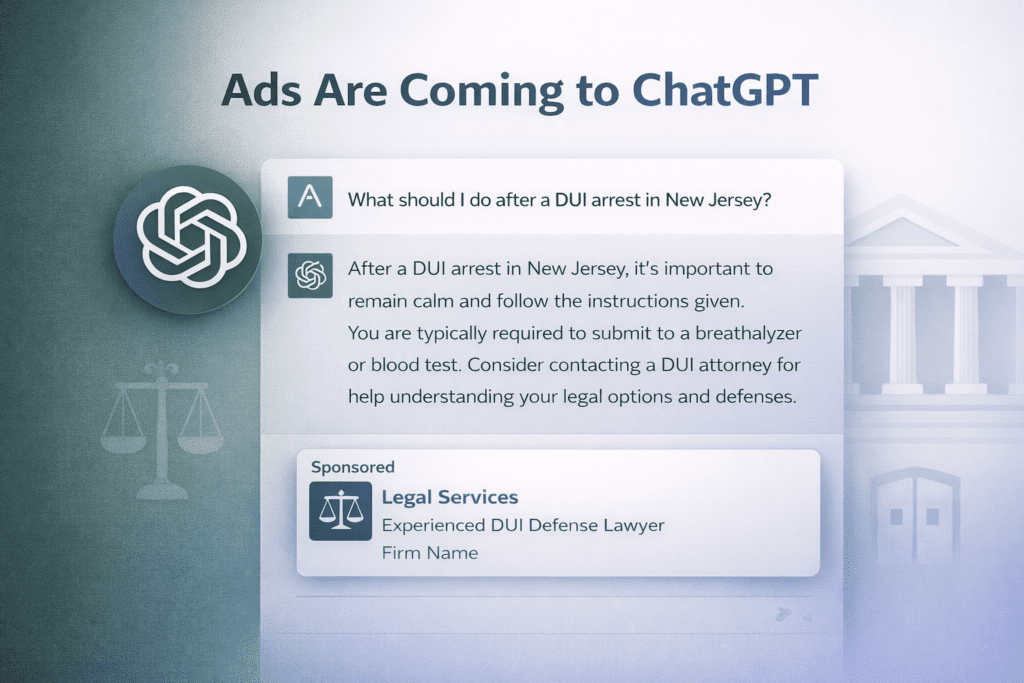
Key Takeaways Advertising inside AI-powered search introduces a new discovery channel—and a new set of questions for law firms. This article explains what ChatGPT Ads are, how the experience may differ from traditional search ads and what firms should evaluate before testing. It focuses on readiness, measurement and client fit rather than novelty. When ChatGPT Ads May Be Worth Testing When it makes sense: A test makes sense when the firm has access, a relevant audience and budget beyond its essential acquisition activity. When to reconsider: Reconsider it if results cannot be evaluated or the firm needs predictable short-term client volume. Treat this article as launch-era context and verify current product details before implementation. Who Will See ChatGPT Ads? During the initial rollout, ads will be shown to: Logged-in adult users in the United States Users on the Free and Go subscription tiers Higher-tier plans—including Plus, Pro, Business, Enterprise, and Education accounts—will remain ad-free. ChatGPT’s responses are generated independently and are not influenced by advertisers. OpenAI has stated that it does not sell user chat data to advertisers and that advertisers receive only aggregated reporting. What Are ChatGPT Ads? ChatGPT Ads are clearly labeled sponsored placements that appear below the AI’s response. Ads are not embedded within ChatGPT’s answers, and OpenAI has emphasized a strict separation between AI-generated content and paid advertising. Key characteristics: Ads appear after ChatGPT’s response Ads are contextual, based on the topic of the conversation Ads are limited to non-sensitive topics Paid plans remain ad-free Users may opt out of ad personalization based on chat data and can clear any data used for advertising purposes. Ads will not be shown to users under 18. An educational explanation of the legal process from ChatGPT Followed by a sponsored legal services ad displayed below the response May receive: How This Could Apply to Legal Searches For example, a user asking: “What should I do after a DUI arrest in New Jersey?” This differs from traditional search advertising because ads appear within a conversational research experience, rather than a keyword-based search results page. Why This Matters for Law Firms Legal marketing has consistently followed changes in how people seek information. Increasingly, consumers are using AI systems/assistants to ask questions such as: “Do I need a lawyer for this?” “How does divorce mediation work?” “What happens after a criminal charge?” “Can a xyz record be expunged?” These are early-stage, high-intent questions, and ChatGPT is becoming a common starting point for this type of research. ChatGPT Ads introduce a scenario where: Law firms may appear earlier in the research process Visibility may occur before a user conducts a Google search AI tools begin to influence how law firms are discovered How ChatGPT Ads Differ From Google Ads ChatGPT Ads are not a replacement for Google Ads, but they function differently. Google Ads Keyword-driven Appear on search results pages Often target users who are ready to take action ChatGPT Ads Conversation-based Contextual rather than keyword-triggered Appear during the research and learning phase For law firms, this suggests a potential shift toward earlier visibility, rather than immediate lead capture. Ethics, Trust, and Legal Advertising Considerations Legal advertising is highly regulated, and OpenAI’s ad framework reflects this sensitivity: Ads are excluded from certain sensitive categories Sponsored content is clearly labeled User data is not sold to advertisers Reporting is aggregated, not user-specific Law firms advertising through AI platforms will still need to comply with: Applicable bar advertising rules Restrictions on misleading claims or guarantees Jurisdictional and practice-area limitations This environment favours clear, factual, and professional messaging. Which Practice Areas May See Early Relevance Practice areas that involve frequent educational questions may see relevance earlier, including: Criminal defense Family law Immigration law Estate planning Early-stage personal injury inquiries These areas commonly involve users seeking guidance before deciding whether to contact a lawyer. How Law Firms Can Prepare Even if ChatGPT Ads are not immediately available to most law firms, preparation can begin now. Focus areas include: Creating clear, educational website content Publishing well-structured FAQs and practice area pages Clearly defining practice areas, jurisdictions, and services Emphasizing accuracy and clarity over marketing language These steps support both organic AI visibility and future advertising efforts. What to Measure Through to Signed Clients Record campaign spend, inquiries, lead quality, consultations and signed clients using the measurement options actually available to the account. Reconcile ad-platform reports with intake records and identify gaps. Compare cost per signed client and collected revenue with other tests, allowing time for prospects to make a decision. Your Next Step Discuss whether AI advertising fits your marketing plan.
Google Ads for Lawyers — Without the Tech Talk Key Takeaways Google Ads can place a firm in front of someone actively seeking legal help, but the platform is easy to overspend on. This plain-English guide explains how the system works, what makes a legal campaign viable and where common breakdowns occur. It shows which questions to resolve before increasing budget. When Google Ads Makes Sense—and When It May Not When it makes sense: Paid search makes sense when people search for your service, your firm can afford a meaningful test and someone can respond to inquiries. When to reconsider: Reconsider launching broad campaigns if the budget is too thin, the landing page is unclear or lead tracking is unreliable. Start with a defined practice area and market. What Is Google Ads (in Plain English)? Google Ads is the platform that lets you pay to show up at the top of Google search results. If someone types “divorce lawyer near me,” you can appear above the organic listings, even before the maps. Google Ads allows your law firm to appear at the very top of search engine results pages (SERPs)—the pages users see after entering a query into a search engine like Google. This means your ad can be displayed above the organic search engine results, giving your firm maximum visibility. These ads are triggered by relevant google searches performed by users. Law firms can choose between different types of google ad campaigns, such as search campaigns and display network campaigns, to reach potential clients. Display ads can appear across the Google Display Network, which includes a wide range of websites and mobile apps, making it effective for brand awareness and retargeting campaigns. Since Google is the most widely used search engine, this is a powerful way for lawyers to reach potential clients right when they are searching for legal services. You only pay when someone clicks your ad. It’s like renting the best billboard in town — but only being charged when someone walks in your office because of it. Why Google Ads Works for Law Firms When people need a lawyer, they don’t wait around. They go to Google. Google Ads allows your law firm to reach potential clients at the exact moment they are searching for legal help. That’s why search ads work so well — they connect your law firm with people already looking for help in your practice area. Here’s why Google Ads is a game-changer: Immediate visibility: Skip the long wait for SEO or referrals. Highly targeted: Show up for searches like “DWI lawyer in [Your City]” or “child custody attorney.” Control your budget: Start small, scale when it works. Compelling ads: Creating compelling ads with clear calls-to-action helps your law firm stand out from competitors and attract more clicks. If you’re running a criminal defense, family law, personal injury, or estate planning practice, Google Ads and these PPC marketing strategies are essential for your law firm’s growth and client acquisition. How Much Does Google Ads Cost for Lawyers? Let’s talk dollars. On average, law firms pay anywhere between $5 to $75 per click, depending on the competition in your area and practice area. Managing your ads budget is crucial for effective PPC advertising, especially in highly competitive fields like personal injury lawyers, where costs per click can be significantly higher. Strategic allocation of your ads budget, focusing on relevant keywords and using negative keywords, helps maximize your return on investment. Careful budget management and campaign optimization are essential for making the most of your law firm’s advertising spend. Here’s a quick cheat sheet: Practice Area Typical Cost per Click Monthly Starting Budget Criminal Defense $10 – $40 $1,500 – $3,000 Divorce / Family Law $8 – $30 $1,000 – $2,500 Personal Injury $50 – $150+ $3,000 – $10,000+ Estate Planning $5 – $20 $750 – $2,000 Practice Area Typical Cost per Click Monthly Starting Budget Criminal Defense $10 – $40 $1,500 – $3,000 Divorce / Family Law $8 – $30 $1,000 – $2,500 Personal Injury $50 – $150+ $3,000 – $10,000+ Estate Planning $5 – $20 $750 – $2,000 Note: You don’t need to be the biggest spender. You just need to be smarter with targeting and tracking results. Also, keep in mind that display ads based on targeted keywords may have different cost structures compared to search ads. How Many Leads Can You Expect from Google Ads? Here’s a rough idea of what you can expect from a $2,000 monthly budget: Clicks: 100–200 Calls or form submissions: 15–30 Signed clients: 3–8 (depending on your intake process) But it’s not just about the numbers. It’s about getting in front of the right people at the exact moment they’re searching for your services. By using targeted keywords and making sure to target specific keywords relevant to your legal services, you ensure your ad appears in front of the most relevant audience, increasing the likelihood of quality leads. How to Set Up a Google Ads Campaign (No Tech Degree Needed) Getting started with Google Ads doesn’t require a computer science degree—just a little know-how and a clear plan. First, set up your Google Ads account. Once you’re in, you’ll choose the type of campaign you want to run. For most law firms, search ads are the best place to start, since they put your firm right in front of people searching for legal services. Next, decide on your ads campaign budget. You’re in control here—set a daily or monthly limit that fits your comfort zone. Now comes keyword research. Use tools like Google Keyword Planner to find relevant keywords and specific keyword phrases, including long-tail keywords and exact match options, that your prospective clients are actually typing into Google. Consider using both broad match and exact match keyword types to balance reach and targeting. Think about the questions or problems your target audience has, and build your keyword list around those. Don’t forget to add negative keywords and build a negative keyword list to