
Brand Awareness

personal injury marketing
Brand Awareness, Law Firm Marketing, Paid Search, Personal Injury, Search Marketing, SEO, Social Media

Top Personal Injury Marketing Tactics for Law Firms: From Awareness to Lead Generation

Marketing a personal injury law firm is not a one-size-fits-all exercise. The most effective strategy depends heavily on the firm’s location, level of competition, case values, and available budget. Law firms spend a significant portion of their marketing dollars—often between 2% and 20% of revenue—to remain competitive in the crowded personal injury marketplace and to maximize ROI. A personal injury practice in New York City, for example, operates in a very different environment than a firm in a mid-sized city or rural market. That said, the most successful firms typically structure their marketing around two core objectives: Awareness – Ensuring potential clients recognize the firm’s brand before they need a lawyer. Lead Generation – Capturing high-intent prospects actively searching for legal help. A balanced strategy combines both. Awareness tactics build trust and recognition over time, while lead generation channels convert that demand into consultations and signed cases. Tracking how marketing dollars are allocated across different channels helps law firms optimize their marketing investment and improve overall campaign performance. Below are some of the most effective marketing tactics personal injury law firms are using today, broken down into these two categories. Introduction to Marketing for Personal Injury Law Firms Marketing for personal injury law firms is a highly competitive and specialized endeavor. Unlike general legal marketing, personal injury lawyer marketing requires a deep understanding of both the legal industry and the unique needs of individuals seeking legal representation after an accident or injury. The goal is to connect personal injury lawyers with those in need of legal services, often at a critical and stressful time in their lives. To stand out, law firms must leverage a variety of marketing channels—both online and offline—to showcase their expertise, build trust, and attract clients. Effective marketing for personal injury law involves a mix of paid advertising, search engine optimization (SEO), social media marketing, content creation, and strategic networking. By utilizing multiple marketing channels, personal injury law firms can increase their visibility, engage with their target audience, and position themselves as the go-to choice for legal representation in personal injury cases. A successful personal injury lawyer marketing strategy is not just about generating leads; it’s about building a reputation for compassion, expertise, and results. This multi-faceted approach ensures that when someone needs a personal injury lawyer, your firm is top of mind. Understanding Personal Injury Clients and Personal Injury Law Personal injury clients are individuals who have suffered harm due to someone else’s negligence and are seeking compensation through legal representation. For personal injury law firms, understanding the motivations, concerns, and emotional state of these clients is essential for effective marketing. Most potential clients are navigating a stressful and unfamiliar process, so demonstrating empathy and a client-centered approach is key to building trust. Personal injury law covers a wide range of practice areas, including car accidents, medical malpractice, workers’ compensation, and more. Each area presents unique challenges and opportunities for law firms to showcase their expertise. Marketing for personal injury requires not only a deep knowledge of these legal areas but also the ability to communicate that expertise in a way that resonates with potential clients. By addressing the specific needs and pain points of personal injury clients—such as the desire for fair compensation, clear communication, and compassionate legal representation—law firms can differentiate themselves and build lasting credibility in the personal injury space. Setting Up a Law Firm Marketing Strategy Developing a successful marketing strategy for law firms begins with a thorough evaluation of current marketing efforts. Start by assessing your firm’s strengths and weaknesses, identifying what’s working and where there’s room for improvement. Next, define clear, measurable goals for your marketing efforts—whether that’s increasing lead generation, expanding your reach to a new target audience, or improving brand recognition. Establishing a realistic marketing budget is crucial. Your budget should support your marketing objectives without overspending, ensuring you can invest in the channels that deliver the best results for your firm. Finally, set up systems to track and measure the results of your marketing strategy. By monitoring key metrics and analyzing performance, law firms can make data-driven decisions, refine their approach, and maximize the return on their marketing investment. A well-structured marketing strategy provides a roadmap for reaching your target audience, generating qualified leads, and growing your personal injury practice. Creating a Brand Identity For personal injury law firms, a strong brand identity is essential to stand out in a crowded market and build trust with potential clients. Your brand identity should reflect your firm’s values, mission, and unique approach to personal injury law. This includes developing a professional logo, a memorable tagline, and a consistent brand voice that resonates across all marketing channels. Consistency is key—whether a potential client encounters your firm on your website, social media, or in a digital ad, the messaging and visual identity should reinforce your expertise and reliability in the personal injury space. Investing in branding services tailored to law firms can help create a cohesive and compelling online presence, making it easier for potential clients to recognize and remember your firm when they need legal representation. A well-defined brand identity not only differentiates your firm from competitors but also positions you as a trusted authority in personal injury law. Awareness Marketing for Personal Injury Law Firms Awareness marketing focuses on visibility and brand familiarity. Most people who eventually need a personal injury lawyer don’t know which firm they will call until the moment an accident happens. Firms that invest in brand awareness dramatically increase the chances that they will be the first name a potential client remembers. Awareness marketing also boosts online visibility, making it easier for potential clients to find the firm when searching online. Trust and familiarity are built over time, and maintaining relationships with existing clients can further enhance brand recognition and generate referrals. Digital Out-of-Home (DOOH) Digital out-of-home advertising includes digital billboards, screens in gas stations, elevators, transit hubs, gyms, restaurants, and retail environments. For personal injury law firms, this channel works particularly well

connected tv ads
Brand Awareness, Law Firm Marketing

Connected TV For Personal Injury Law Firms: A Complete Guide

Personal injury law firms operate in one of the most competitive advertising markets, navigating a highly competitive legal landscape where standing out is essential. Firms compete heavily on platforms like Google Ads, where keywords such as “car accident lawyer” or “personal injury attorney near me” can cost $100–$500 per click in some markets. Because of this intense competition, many personal injury firms are looking for ways to build awareness earlier in the client journey before someone begins searching for a lawyer. Connected TV helps law firms reach a broader audience beyond traditional referrals, expanding their visibility and attracting more potential clients. One of the most powerful ways to do this today is Connected TV (CTV) advertising. While broadcast TV has long been a traditional advertising channel for law firms, Connected TV allows personal injury law firms to deliver high-quality video ads directly to households watching streaming television. This modern form of advertising combines the credibility of television with the targeting capabilities of digital marketing. In this guide, we’ll explain how Connected TV advertising works and why it has become an effective strategy for personal injury law firms. Introduction to Video Advertising Video advertising has rapidly become a cornerstone of effective marketing strategy for law firms, especially those specializing in personal injury law. As consumer habits shift toward streaming services and connected TV, personal injury law firms have a unique opportunity to reach their target audience with engaging video ads. These ads allow law firms to showcase their expertise, highlight real client testimonials, and build a strong brand identity that resonates with personal injury victims. By leveraging video advertising, personal injury lawyers can increase their online presence and generate leads from viewers who may not have considered legal services before. Video content is particularly powerful for establishing trust and credibility, as it enables law firms to communicate their values, share success stories, and demonstrate their commitment to helping clients. With the ability to serve ads directly to households via connected TV and streaming platforms, law firms can ensure their message reaches the right audience at the right time, driving more cases and strengthening their position in the competitive legal landscape. What is Connected TV Advertising? Connected TV refers to televisions that stream content through the internet instead of traditional cable or broadcast signals. This includes: Smart TVs Streaming devices like Roku, Fire TV, and Apple TV Gaming consoles connected to televisions Streaming TV is a key distribution channel for video content, allowing law firms to reach audiences across both digital and broadcast platforms as part of a comprehensive video advertising strategy. When viewers watch content through streaming platforms, advertisements can be delivered within that content. Popular streaming platforms where CTV ads appear include: Hulu YouTube (on TV screens) Roku Channel Amazon Fire TV Peacock Tubi Pluto TV Paramount+ These ads typically appear as 15 or 30 second video spots during streaming shows or movies. Unlike traditional television advertising, Connected TV allows law firms to target specific audiences instead of broadcasting ads to an entire market. CTV provides the same benefits as broadcast TV but with advanced targeting, extended reach, unduplicated audience, and measurable results. Understanding CTV and OTV Advertising For law firms looking to stand out in a crowded legal market, understanding the difference between Connected TV (CTV) and Over-the-Top Video (OTV) advertising is essential. CTV refers to any television device—such as smart TVs, streaming sticks, or gaming consoles—that connects to the internet to stream video content. OTV, or Over-the-Top Video, is the broader delivery of video content over the internet, bypassing traditional cable or satellite providers entirely. By leveraging CTV and OTV advertising, personal injury law firms can deliver compelling video advertising directly to their target audience, reaching potential clients where they are already consuming streaming content. Unlike traditional TV, CTV advertising allows law firms to precisely target viewers based on geographic location, such as specific ZIP codes, as well as demographic and behavioral data. This means your video content can reach households most likely to need personal injury law services, increasing the chances of generating new clients. With advanced audience targeting, law firms can ensure their marketing efforts are focused on the right viewers—those who are most likely to require legal representation after an accident. This level of precision makes CTV and OTV advertising a powerful tool for personal injury law firms aiming to grow their client base and maximize their advertising budget. Why Personal Injury Law Firms Are Investing in CTV Advertising Personal injury law is a trust-based service. Effective marketing strategies are essential for personal injury law firms to communicate their value to potential clients and stand out in a competitive market. Potential clients want to feel confident that the lawyer they hire is experienced, credible, and capable of winning their case. Video advertising on television screens allows law firms to build that trust in ways that text ads cannot. Key elements such as trust, authority, and relatability are crucial for successful connected TV (CTV) campaigns, helping firms establish credibility and connect with their audience. Build Brand Recognition Before Someone Needs a Lawyer Most people do not search for a personal injury lawyer until after an accident occurs. However, when someone already recognizes a law firm from television advertising, they are far more likely to contact that firm after an injury. This phenomenon is known as mental availability. When someone needs legal representation, they remember the law firms they have seen before. Lawyer commercials and personal injury lawyer ads play a key role in creating these memorable impressions, making your firm top-of-mind when a need arises. Effective personal injury lawyer commercials should focus on storytelling and emotional appeal to connect with potential clients, humanize your law firm, and build trust. Connected TV allows law firms to build this recognition efficiently. Reach High-Value Households One of the biggest advantages of Connected TV is audience targeting. With precision targeting, CTV allows law firms to reach the most relevant households by leveraging advanced data to deliver ads to viewers

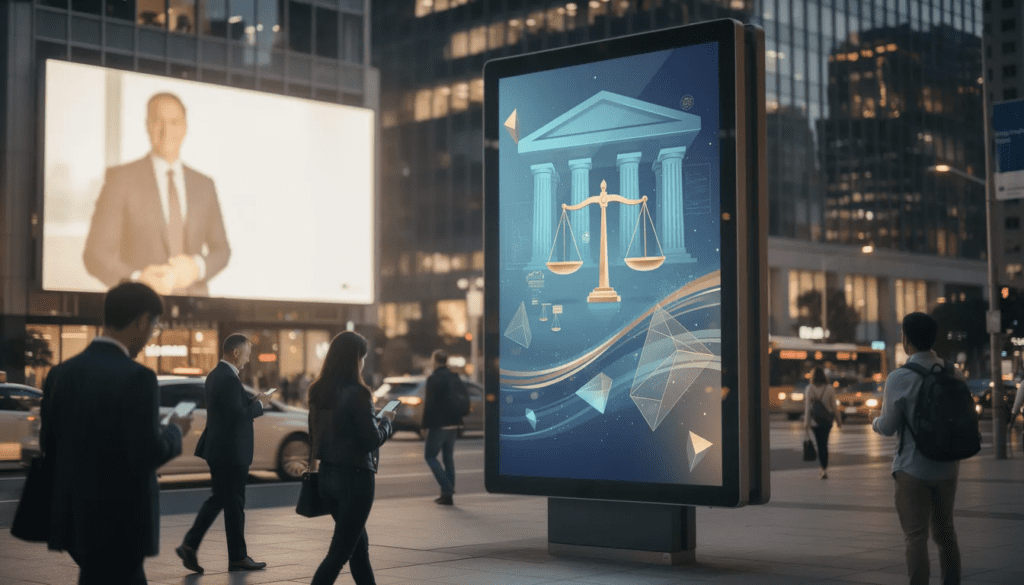
The image depicts a vibrant cityscape featuring a digital billboard prominently displaying a law firm's advertisement. The scene captures the essence of modern legal marketing, showcasing the integration of technology in outdoor advertising, with cars and pedestrians passing by, symbolizing the reach and visibility of personal injury lawyers in attracting potential clients.
Brand Awareness, Law Firm Marketing

Beyond Traditional Lawyer Billboards: How Digital Out-of-Home Advertising Is Changing Law Firm Marketing

For decades, lawyer billboards have dominated highways across America. From personal injury lawyer billboards promising “Millions Recovered” to criminal defense ads near courthouses, law firm billboards have long been a staple of legal marketing. Historically, the American Bar Association restricted lawyer advertising to maintain professionalism and public trust in the legal industry. Over time, however, the ABA’s rules have evolved, allowing for more aggressive marketing tactics and greater visibility for attorneys. But the way most attorneys buy billboard advertising hasn’t changed in years. They sign long-term contracts with a single publisher, pay a large upfront fee, and lock in one piece of creative for 6 to 12 months — with little flexibility and almost no measurable data. In particular, the rise of personal injury lawyers and accident lawyers as dominant users of billboard advertising has transformed the landscape, with these attorneys leveraging bold branding and high-visibility campaigns to attract clients. Meanwhile, a quieter revolution has been happening in outdoor advertising: Digital Out-of-Home (DOOH). Law firms now operate more like businesses, with marketing strategies and client acquisition at the core of their growth efforts. And most law firms don’t even know it exists. The rise in billboard advertising by personal injury lawyers reflects a broader shift in the legal industry, where law firms increasingly view themselves as businesses focused on marketing and client acquisition. Why Lawyer Billboards Have Always Worked Before we talk about modernization, let’s acknowledge something important: lawyer billboards work. Billboard ads are a form of legal advertising that cannot be skipped or ignored, ensuring maximum visibility for law firms. Their strategic placement in high-traffic areas means your message is seen by thousands of potential clients every day. There’s a reason personal injury attorney billboards dominate major highways in states like Texas, Florida, California, and New Jersey. Outdoor advertising builds: Massive visibility Authority and credibility Market dominance Name recognition Top-of-mind awareness Trust and credibility, thanks to their visibility and consistency in high-traffic locations A single urban highway billboard can generate 25,000 to 50,000 views per day. Approximately 66% of consumers recall seeing outdoor legal ads, and over 40% engage with them in some way, such as visiting a website. For personal injury firms especially, repetition is powerful. Personal injury attorneys dominate billboard advertising because they target accident victims who may need legal assistance after unexpected injuries. When someone is injured in a car accident, they don’t scroll through dozens of websites. They call the name they recognize. Repeated exposure to billboards enhances their effectiveness, as potential clients often see them multiple times before needing legal services. Billboard ads often highlight the potential for damages awarded in personal injury cases, appealing to accident victims seeking compensation. Billboards create familiarity. Familiarity builds trust. Trust drives calls. The issue isn’t whether law firm billboards are effective. The issue is how most firms are buying them. The Traditional Way Law Firms Buy Billboards (And Its Limitations) When a firm decides to invest in lawyer billboards, the typical process looks like this: Many law firms use billboards as a primary marketing tool, contributing to the hundreds of thousands of daily exposures among commuters and residents, especially in major cities like Philadelphia. Contact a billboard publisher (Lamar, Clear Channel, Outfront, etc.) Review a limited list of available locations Select one or two boards Sign a 6–12 month contract Submit one creative design Let it run Lawyer billboards are considered a reasonably safe and affordable advertising option for attorneys due to strict ethical rules governing legal advertisements. This approach hasn’t evolved in decades — and it creates several limitations. Large Upfront Commitments Traditional personal injury lawyer billboards often require: Long-term contracts Fixed monthly payments Little flexibility In competitive markets, premium placements can cost thousands — even tens of thousands — per month. Many personal injury billboard ads promise big money to attract clients, focusing on the potential for substantial settlements or verdicts. High-volume billboard advertisers may need to prioritize quick case settlements to cover their significant advertising costs. Once signed, you’re locked in. There’s no ability to test multiple messages. No option to shift budget mid-campaign. No scaling based on performance. For firms used to optimizing Google Ads weekly, this model feels outdated. Limited Inventory Access When you work directly with one publisher, you only access their inventory. If that company owns 20% of the digital billboards in your market, you’re seeing only a fraction of available opportunities. You may miss: High-traffic commuter corridors Screens near hospitals Accident-prone intersections Strategic neighborhood placements Bus stops as a strategic placement for legal advertising You’re not buying the market. You’re buying what one company owns. Static Creative Most traditional law firm billboards run one design for months. But law firms don’t offer just one service. A personal injury practice may handle: Car accidents Truck accidents Motorcycle accidents Slip & fall cases Construction injuries Wrongful death Billboard messaging should be tailored to the specific legal issue and reflect the emotional urgency or state of potential clients based on their legal needs. Why limit your exposure to one static message? Modern marketing demands flexibility. No Targeting or Dayparting Traditional billboards show the same message: 24 hours a day 7 days a week To every driver There’s no time targeting. Imagine running DWI ads at 2:00 PM. Or family law messaging at midnight. It’s inefficient. Yet static contracts don’t allow for precision. Minimal Performance Data Most publishers provide estimated impressions based on traffic counts. But you don’t receive: Verified delivery data Real-time reporting Cross-channel attribution Optimization capabilities In today’s marketing landscape, that lack of visibility is a major disadvantage. What Is Digital Out-of-Home (DOOH) Advertising? Digital Out-of-Home advertising modernizes how lawyer billboards are purchased and managed. Instead of signing long-term contracts with a single publisher, law firms can access digital screen inventory programmatically — similar to how online ads are bought. DOOH includes: Highway digital billboards Transit shelters Urban panels Gas stations Retail centers Office buildings Airports The difference is control, flexibility, and measurement. Traditional Law Firm Billboards vs. Digital Out-of-Home

Scroll to Top