Author name: Kelon

law firm client acquisition
Law Firm Marketing

5 Things Every Law Firm Should Have In Place to Sign More Clients

When law firms want to grow, the conversation often starts with marketing. Should we increase our Google Ads budget? Should we invest more in SEO? Should we be posting more on social media? While these questions are important, they often overlook a bigger issue. Many firms don’t have a traffic problem. They have a conversion problem. In other words, potential clients are already finding the firm. The challenge is turning those opportunities into signed clients. The good news is that improving client acquisition doesn’t always require a larger marketing budget. Sometimes the biggest gains come from improving what happens after a prospective client visits your website. Here are five things every law firm should have in place to convert more opportunities into clients. 1. Mobile-Friendly Practice Area Landing Pages The majority of legal searches now happen on mobile devices. Someone searching for a divorce lawyer, criminal defense attorney, or estate planning lawyer is often researching from their phone. If your website is slow, difficult to navigate, or doesn’t clearly explain how you can help, potential clients may leave before contacting your firm. A strong landing page should quickly answer three questions: What type of cases do you handle? Why should someone contact your firm? How can they reach you right now? Every practice area should have a dedicated page designed specifically for that audience. For example, someone searching for a divorce lawyer has different concerns than someone searching for a child custody attorney. The page should address those concerns directly and provide a clear next step. At a minimum, every page should include: A clear call-to-action A prominent phone number Click-to-call functionality on mobile A contact form Easy navigation Your website is often the first impression a prospective client has of your firm. Make it count. 2. A 24/7 Answering Service Legal issues don’t always happen between 9:00 AM and 5:00 PM. People search for lawyers at night. On weekends. During emergencies. And often during some of the most stressful moments of their lives. Imagine someone receives a DUI at midnight. Or a spouse announces they want a divorce after dinner. Or a parent is dealing with a child custody issue on a Sunday afternoon. These individuals are looking for answers immediately. If they call your office and nobody answers, there is a good chance they will contact another firm. Every missed call represents a potential lost opportunity. A professional answering service helps ensure that someone is available to capture lead information even when your office is closed. The goal is simple: Never let a qualified prospect reach a dead end. 3. Website Chat or Chatbot Not every prospective client wants to pick up the phone. Some prefer to communicate through chat. Others may be researching legal options while at work or in situations where privacy is important. Consider someone exploring divorce options while sitting beside their spouse. Or a professional researching legal help during a lunch break. A phone call may not be practical. Chat provides another way for prospects to engage with your firm and ask questions. Whether you use live chat, a chatbot, or a hybrid solution, the objective is to provide another pathway into your intake process. The best client acquisition systems give prospects options. Phone. Form. Chat. Text. The easier it is to start a conversation, the more opportunities you can capture. 4. CRM or Intake Software Generating leads is only valuable if those leads are properly managed. Every inquiry should flow into a centralized system where your team can track conversations, consultations, and signed clients. Without a CRM or intake platform, opportunities can easily fall through the cracks. More importantly, these systems allow firms to automate portions of the client acquisition process. Imagine a potential client contacts your firm at 2:00 AM. The answering service collects their information. Within minutes, the prospect receives an automated text message and email confirming that their inquiry has been received and that someone from the firm will be reaching out shortly. That simple follow-up can be the difference between keeping a prospect engaged and losing them to a competitor. Popular legal CRM and intake platforms include: LeadDocket Lawmatics Clio Grow Beyond lead management, these platforms also create the foundation for better reporting and attribution. 5. Client & Revenue Reporting This is where many firms struggle. Most firms can tell you how many leads they generated. Far fewer can tell you: Which marketing channels generated signed clients Which channels generated revenue Which channels are most profitable Where they should invest additional budget Consider this question: If you had $5,000 more in marketing budget tomorrow, would you know exactly where to invest it? The answer should not be based on assumptions. It should be based on data. The strongest firms track more than leads. They track business outcomes. They know: Which channels generate qualified leads Which channels generate consultations Which channels generate signed clients Which channels generate revenue This information allows leadership to make informed decisions and allocate marketing budgets more effectively. Without reporting, marketing becomes guesswork. With reporting, marketing becomes a predictable growth engine. The Goal Isn’t More Leads Many firms assume that growth comes from generating more leads. In reality, growth often comes from improving what happens after a lead is generated. A better landing page. A faster response. A missed call captured by an answering service. A prospect engaged through chat. A lead managed properly through a CRM. A dashboard that identifies which channels deserve more investment. Each improvement may seem small on its own. Together, they create a client acquisition system that consistently turns opportunities into signed clients. The firms that grow most effectively are not always the ones spending the most on marketing. They are the ones with the right systems in place to attract, capture, track, and convert potential clients. How Does Your Firm Compare? If you’re not sure whether your firm has the right client acquisition systems in place, start with our free Law Firm Client Acquisition Checklist. The checklist will help

law firm client acquisition
Law Firm Marketing

Could Your Law Firm Be Signing More Clients?

Law firms invest thousands of dollars each month in marketing. They run Google Ads. They invest in SEO. They build websites. They post on social media. Some work with multiple marketing vendors at the same time. Yet despite all of this activity, growth often falls short of expectations. The number of signed clients remains stagnant. Revenue isn’t increasing at the pace leadership expected. And when results don’t improve, the instinct is often to invest in more marketing. More advertising. More content. More budget. But what if the problem isn’t a lack of marketing? What if the problem is what happens after a potential client discovers your firm? Marketing Is Only One Piece of the Puzzle Marketing plays an important role in generating awareness and driving opportunities. Google Ads can generate clicks. SEO can increase visibility. Social media can build trust. Referrals can create introductions. But none of these activities guarantee growth. Growth occurs when a firm has systems in place to consistently attract potential clients, capture opportunities, track performance, and convert inquiries into signed clients. Think about the journey of a prospective client. They discover your firm online. They visit your website. They decide whether to call, complete a form, start a chat conversation, or leave and contact a competitor. If they do contact your firm, what happens next? How quickly does someone respond? Can leadership identify where that lead came from? Can they determine whether that lead eventually became a client? Every step matters. When one part of the process breaks down, opportunities are lost. The Four Pillars of Client Acquisition When evaluating a firm’s ability to generate consistent growth, four areas deserve attention. Visibility Before someone can hire your firm, they need to find it. Today, visibility extends far beyond traditional search engines. Prospective clients may discover your firm through Google Search, Google Business Profile, Local Services Ads, social media, referrals, YouTube, podcasts, or increasingly through AI-powered search tools such as ChatGPT. Visibility is about ensuring your firm appears where prospective clients are actively searching for legal help. Without visibility, there are no opportunities to capture. Lead Capture Generating interest is only the beginning. Once someone decides to contact your firm, the experience should be simple and frictionless. People facing legal issues are often dealing with stressful situations and looking for immediate answers. If a phone call goes unanswered, a form submission sits untouched, or a visitor can’t find an easy way to contact the firm, that opportunity may disappear. Successful firms make it easy for prospects to connect through multiple channels, including phone, forms, chat, text messaging, and answering services. The easier it is to reach your firm, the more opportunities can be converted into consultations. Client Attribution & Revenue Tracking This is where growth-minded firms begin to separate themselves. Lead volume is only one piece of the picture. A firm may generate hundreds of leads each month, but if leadership cannot identify which marketing channels produced qualified consultations, signed clients, and revenue, it’s difficult to know where to invest next. Consider this question: If you had $5,000 more in marketing budget tomorrow, would you know exactly where to invest it? The answer should be based on data, not intuition. The strongest marketing decisions are made when leadership understands: Which channels generate qualified leads Which channels generate signed clients Which channels generate revenue Which channels deserve additional investment This level of visibility allows firms to scale what is working while eliminating waste. Tracking & Consent Reliable reporting depends on reliable data. Tracking systems provide the foundation for understanding marketing performance and client acquisition. Analytics platforms, call tracking software, CRM systems, and conversion tracking tools help connect marketing activity to business outcomes. At the same time, privacy regulations continue to evolve. Proper consent management ensures website visitors can choose how their data is used while allowing firms to maintain accurate reporting and advertising performance. Without reliable tracking, it becomes difficult to measure success, identify opportunities, or make informed decisions. Most Firms Track Leads. Few Track Revenue. Lead counts are relatively easy to track. Revenue is much harder. A dashboard showing website traffic, clicks, and form submissions may look impressive, but those metrics alone don’t answer the questions leadership cares about most. Questions such as: Which marketing channels generate qualified leads? Which channels generate signed clients? Which channels generate revenue? What is the firm’s cost per client? Where should the next marketing dollar be invested? The answers to these questions often reveal opportunities that would otherwise remain hidden. Instead of focusing solely on lead volume, successful firms focus on outcomes. They connect marketing activity to signed clients and revenue. That shift in thinking transforms marketing from a cost center into a growth engine. How Does Your Firm Compare? Opportunities for growth often exist in places that aren’t immediately obvious. Sometimes the issue is visibility. Sometimes it’s lead capture. Sometimes the firm lacks the reporting needed to understand which marketing activities are actually producing results. The challenge is identifying where those opportunities exist. To help law firm owners and managing partners evaluate their current position, we created the Law Firm Client Acquisition Checklist. The checklist is designed to help you assess whether your firm has the foundational systems needed to attract more qualified leads, sign more clients, and make smarter marketing decisions. Download the checklist and see how your firm’s client acquisition system compares. Sustainable growth is rarely the result of spending more money. More often, it comes from building better systems.

business-law-marketing
Law Firm Marketing

Business Law Marketing: How Tough is It to Run Ads for Business Lawyers (And What You Need to Do to Get it Right)

  Running paid ads for business lawyers is a tricky thing – its not like personal injury or criminal defense ads, which can be a real wild west. But its not exactly a walk in the park either. In fact, a lot of law firms waste a ton of money on Google Ads and LinkedIn campaigns because they underestimate just how tricky this practice area is, and how crucial it is to have a digital marketing strategy that’s specifically tailored for law firms. So how tough is it really? Short answer: moderately to highly difficulties – but with huge potential for profits if you get it right. Let’s break it down. Attorney marketing typically requires you to work with a specialized agency that actually understands the unique challenges of running ads for business lawyers. Introduction to Law Firm Marketing Law firm marketing is about more than just putting up some ads – its a strategic process that helps law firms stand out, attract new clients, and build a lasting brand reputation in a crowded field. The modern legal marketing landscape is a mix of digital and traditional tactics, all working together to drive growth for law firms while keeping an eye on the compliance rules from state bar associations. At the heart of effective law firm marketing are digital strategies like search engine optimisation (SEO), content marketing, and local SEO. These approaches make sure your law firm is front and centre when people search online for legal services. A law firm website that’s been properly optimised, paired with a steady stream of engaging content and an active social media presence, can help establish your firm as a trusted authority and keep your brand top of mind. And with the rise of AI-powered search results on platforms like ChatGPT and Gemini – law firms need to adapt to new technologies and keep a consistent, professional online presence to attract new clients, build their brand reputation and secure long-term success in an ever-changing digital landscape. Building a Strong Online Presence For law firms, having a strong online presence is no longer a nice to have – its essential for attracting potential clients and establishing credibility in the legal industry. The foundation of this presence is a professional law firm website that looks good, is easy to use and has been optimised for search engines. Getting your site to rank high in search results for relevant keywords is key – making it easier for potential clients to find you when they need legal services. But a great website is just the start. Content marketing – like publishing informative blog posts, guides and FAQs – shows off your expertise and builds trust with visitors. Social media marketing lets you engage with your audience, share insights and show off your firm’s personality, while reputation management lets you keep an eye on and respond to client reviews – all of which helps build your firm’s credibility. Some of the key components of an effective law firm website are a clear message about what services you offer, intuitive navigation, and strong calls to action that encourage visitors to reach out. By combining these elements with ongoing content and social media efforts, law firms can attract potential clients, stand out in search engines and build a reputation as leaders in their field. Why Advertising for Business Lawyers is Tough 1. Lower Urgency = Lower Conversion Rates Business law doesn’t usually involve high-pressure situations like a DUI arrest or a car accident. Instead, you get people searching for things like “business lawyer near me” or “startup legal advice” – which is basically just early-stage research, price comparisons and long decision cycles. What this means: you’re going to see lower conversion rates and longer sales timelines – which is why its so crucial to focus on attracting the right clients, rather than just trying to flood yourself with leads. 2. Click Costs Add Up Quickly Business law keywords aren’t cheap – especially in competitive markets like San Francisco. If you’re not careful, you can burn through your budget on broad searches, irrelevant queries and low-quality traffic instead of attracting more qualified leads that will actually give you a good return on investment. Even moderately competitive terms can cost $10-$40+ per click – and that’s just for the low-hanging fruit. If you’re targeting niche or high-intent queries, its even more expensive. 3. Lead Quality Can Be Inconsistent Not every lead is a good lead. You get people looking for free advice, or small businesses with tiny budgets – which may not be a great fit for your practice. And some people may just be doing their own research, rather than actually looking to hire a lawyer. This is where most campaigns go wrong – they focus on lead volume rather than lead quality. And in the long term, its the quality of your leads that’s going to determine whether your marketing campaign is successful. 4. Competition is More Sophisticated Than You Think In major cities like San Francisco, you’re competing against established firms with a strong brand presence, agencies that specialise in legal PPC and firms that are throwing money at SEO and content. So you need to make sure your ads are: Highly targeted Strategically structured Constantly optimised Having a whole team totally dedicated to legal marketing can give your firm a real competitive edge – as their combined expertise ensures your strategies are always staying right ahead of the curve. Why This Still Presents a Really Good Opportunity Even though it’s tough, business law is one of the most under-estimated areas in legal advertising. Every law firm needs marketing strategies tailored to their particular needs, so they get the specialized support they need to stand out and actually succeed. 1. High Value of Client Acquisitions A single client can be worth: $5,000 $10,000 $50,000+ over time Which is a good thing, because that means that you don’t need lots and lots of leads, you just need the right

google-keynote-2026
AI Search

Google’s AI Search Revolution: What Google’s Latest Keynote Means for Law Firm Marketing

Google’s AI Search Revolution: What Google’s Latest Keynote Means for Law Firm Marketing   Google’s latest keynote at Google I/O and Google Marketing Live – and it’s a big one – just drove one thing home: Google AI Search is about to enter a whole new era – and it’s driven by AI, conversational search, and answer-first experiences. Powered by generative AI, what we’re seeing is a shift in information retrieval from keyword matching towards a super smart answer engine that can research, format, and summarise info for users. For all law firms that rely heavily on Google Search for lead generation – these changes are going to have a pretty dramatic impact on SEO and paid search strategy over the next 12-24 months. For years, legal marketing was all about: getting your webpages to rank, bidding on high-intent keywords, optimising landing pages, and improving conversion rates. That model still matters, but Google is rapidly moving towards AI-generated answers, conversational interactions and predictive ad formats that reduce the number of clicks users make before getting the information they want. Google Search now uses AI to understand, reason over, and synthesize data into complete answers. For law firms and legal marketers, the message is simple: traditional SEO alone is going to be no longer enough. PPC campaigns are going to become more AI-driven and less focused on keywords. search is becoming an “answer engine”. Law firms that build trust, authority and structured content will have a major advantage. The Biggest Shift: From “Search Engine” to “Answer Engine” Google introduced major upgrades to AI Mode and AI Overviews, powered by Gemini AI. The search experience is becoming more conversational and personal – allowing users to ask more complex questions instead of short keyword searches, and not always needing to do multiple searches to resolve nuanced topics. Instead of typing: “child custody lawyer NJ” users may now ask: “What should a father do if he believes the mother is violating a custody agreement in New Jersey?” Google uses a query fan-out process to break that query into subtopics, search them all at the same time, and combine the findings into a clear response. Google’s AI features are increasingly going to generate structured summaries at the top of the results page – often using headers or bullet points, including: direct answers, summaries, recommendations, follow-up prompts, and contextual suggestions before users even click a website. For law firms this means content strategy has to evolve beyond just simple keyword targeting. AI Mode can also preserve context for follow-up questions within the same session. What Law Firms Need to Do Law firms need to start producing content that answers real-world questions from potential clients searching for legal services in natural language. This includes: creating FAQ-style legal content writing conversational blog articles detailed practice area pages structured Q&A sections video explainers attorney thought leadership content Long-form blog articles can improve organic traffic and help attract new clients. Effective legal marketing is a combination of SEO with other techniques such as website optimisation, social media and networking. Google’s AI systems are prioritising content that demonstrates expertise, authority, trustworthiness, and clarity. Legal topics fall under Google’s “Your Money or Your Life” (YMYL) framework – meaning trust and credibility matter even more in AI-generated search experiences, and keyword research should focus on the relevant terms people actually use. AI Overviews Will Reduce Organic Clicks One of the biggest concerns for publishers and marketers is the rise of AI Overviews. Google is increasingly answering questions directly inside search results, and AI Overviews provide concise snapshots that summarise topics before users click through – reducing the need for users to visit websites to discover basic answers. For law firms, this creates both a challenge and an opportunity. These responses can also include direct source links within the answer – giving users immediate access to supporting content. If your firm is included in these features, it can increase visibility with potential searchers. The Challenge Informational legal searches may generate fewer website visits because users can get summarised legal guidance directly from Google. Examples: “How long does divorce take in NJ?” “What is a restraining order?” “Can I refuse a breathalyzer?” “What happens after a DUI arrest?” The Opportunity Law firms that become trusted citation sources inside AI-generated answers will gain enormous visibility and authority. This means law firms now need to optimize content not just for rankings – but for AI citation inclusion. Google’s New AI Ad Formats Could Reshape Legal Marketing and Lead Generation One of the biggest announcements from Google’s keynote was the unveiling of entirely new AI-powered ad experiences designed specifically for conversational search behavior. For law firms, these formats could help attract new clients by matching ad messages more closely to real search intent. They may also help generate leads when campaigns connect useful offers with the right audience at the right moment. Google is no longer thinking about ads as static text placements triggered by exact-match keywords. PPC still requires a clear plan around relevant keywords and geographic targeting for legal services. Instead, ads are becoming: contextual, conversational, dynamically generated, and AI-assisted. The screenshots Google shared during the keynote provide a glimpse into what the future of search advertising may look like. Firms will still need to track performance and adjust campaign spend over time to protect ROI. 1. Conversational Discovery Ads Google introduced a new format called Conversational Discovery Ads, where ads are dynamically generated based on a user’s natural-language question. In the example Google shared, a user searches: “Low-maintenance ways to make my home smell like a spa.” Instead of showing traditional product ads, Google’s AI generates a recommendation-style sponsored experience complete with: product summaries, AI-generated explanations, images, and contextual recommendations. Another example showed AI-generated sponsored recommendations for smart home fragrance devices, where Gemini summarized: product benefits, user experience, ideal use cases, and key differentiators. For law firms, imagine a future search like: “I need help after getting arrested for DUI in New Jersey and

law-firm-crm
CRM

The Real Reason Some Law Firms Grow Faster Than Others: Law Firm CRM

For many law firms, the default response to slow growth is simple: “We need to spend more on marketing.” More Google Ads. More social media. More leads. But here’s the reality—the fastest-growing firms aren’t just increasing their budgets. They’re changing how they measure success. And that shift is making all the difference. Fast-growing firms are also prioritizing improvements in the client experience, recognizing that better client interactions and communication are just as critical as marketing spend. The Real Problem Isn’t Always Your Marketing If you’re like most law firms, you’ve probably asked yourself: “Why aren’t these leads turning into clients?” “Are we getting low-quality leads?” “Is our agency underperforming?” It’s easy to point fingers at marketing channels or partners. But in many cases, marketing isn’t the problem. The measurement is. Most firms are still optimizing for platform metrics, not business outcomes. The Trap of Platform Metrics Marketing platforms are designed to show performance in their own terms: Cost per click (CPC) Cost per lead (CPL) Click-through rate (CTR) Conversion rate These are key metrics for evaluating email marketing and advertising efforts, but they do not provide a complete picture of overall campaign performance. Tracking email marketing ROI is crucial because it allows law firms to measure the true effectiveness and profitability of their email campaigns. These metrics are useful—but incomplete. A campaign can generate: Cheap leads High volume Strong click performance …and still fail where it matters most: 👉 Signed clients👉 Revenue generated👉 Return on investment (ROI) If you’re only optimizing for CPL, you might be optimizing for the wrong outcome. Leads Don’t Pay the Bills—Clients Do Let’s say your firm generates 100 leads this month. 40 are unqualified 30 never answer follow-ups 20 are price shopping 10 actually retain Now compare that to a campaign generating 40 leads: 20 are highly qualified 15 retain Which campaign is better? The second one—by a mile. But if you’re only looking at CPL, you might never realize it. To truly assess which campaign is better, you need to calculate marketing ROI by comparing the money gained from a marketing campaign to the money spent on it. The Shift: From Leads to Revenue The fastest-growing law firms are making a critical shift: They’re optimizing for retained clients and revenue—not just leads. By focusing on revenue, law firms can generate sales by tracking and attributing marketing efforts to actual client conversions, not just initial inquiries. Evaluating all marketing activities collectively is crucial for understanding their combined impact on revenue and business growth. This requires connecting marketing performance to what happens after the form fill or phone call. That’s where most firms fall short. Why Most Firms Struggle to Connect the Dots The biggest gap isn’t in marketing—it’s in tracking and attribution. Most law firms have: Google Ads and Meta campaigns running Call tracking tools like CallRail Website form submissions But what happens next? Was the lead qualified? Did they book a consultation? Did they retain? What was the case value? Tracking client data is essential at this stage. A law firm CRM centralizes important details such as contact information, communication history, case updates, and billing records, making it easier to manage client relationships and improve efficiency. Without this data, marketing decisions are being made in the dark. The Rise of Customer Relationship Management-Driven Marketing To solve this, leading firms are investing in CRM systems that connect marketing to revenue and support customer relationship management. CRM systems are essential tools for law firms to manage client interactions and relationships more effectively. Using a CRM can improve efficiency, productivity, and customer service in law firms: Clio Grow Lawmatics LeadDocket HubSpot These platforms allow firms to track: Lead status (qualified, unqualified) Consultation booked Retained clients Case type and value This transforms marketing from a cost center into a measurable growth engine. Understanding Your Marketing Channels To maximize your marketing ROI, it’s essential to understand the unique strengths and roles of each marketing channel your law firm uses. Marketing efforts can span a wide range of channels, including social media marketing, email campaigns, content marketing, search engine optimization (SEO), and paid advertising. Law firms should consider different marketing channels, including digital advertising, paid social media, and search advertising, as part of a comprehensive strategy. Each channel offers distinct advantages for reaching your target audience and converting potential clients into satisfied clients. Email marketing typically delivers the highest ROI among marketing channels, while paid social media and search advertising show moderate returns. For example, social media marketing is a powerful tool for building brand awareness and engaging with your community, while SEO helps your law firm appear in local searches when prospective clients are actively seeking legal services. It’s important to select appropriate social media channels and share a variety of social media posts to engage audiences and optimize ROI. Content marketing, such as blog posts or client testimonials, positions your law firm’s expertise and nurtures trust over time. By analyzing the performance of each marketing channel, you can allocate your marketing budget more effectively, ensuring every dollar spent delivers a strong return on investment. Understanding these differences allows your law firm to tailor its marketing strategies, reach the right audience, and achieve your firm’s goals. These strategies are relevant for any size of practice, from a small law firm to larger firms. The Role of Content Creation in Law Firm Growth Content creation is a cornerstone of any successful law firm marketing plan. By developing a robust content marketing strategy, your law firm can do more than just fill a blog—it can establish authority, build trust, and attract a steady stream of prospective clients. High-quality content, whether in the form of blog articles, FAQs, case studies, or client guides, allows your firm to provide valuable insights that address the real concerns and questions of potential clients. A strategic approach to content marketing not only showcases your law firm’s expertise but also plays a critical role in improving your local SEO. When your website consistently publishes relevant, informative

google-local-pack-lawyers
Law Firm Marketing, Search Marketing, SEO

Google Local Pack: How Law Firms Can Dominate Local Search Results

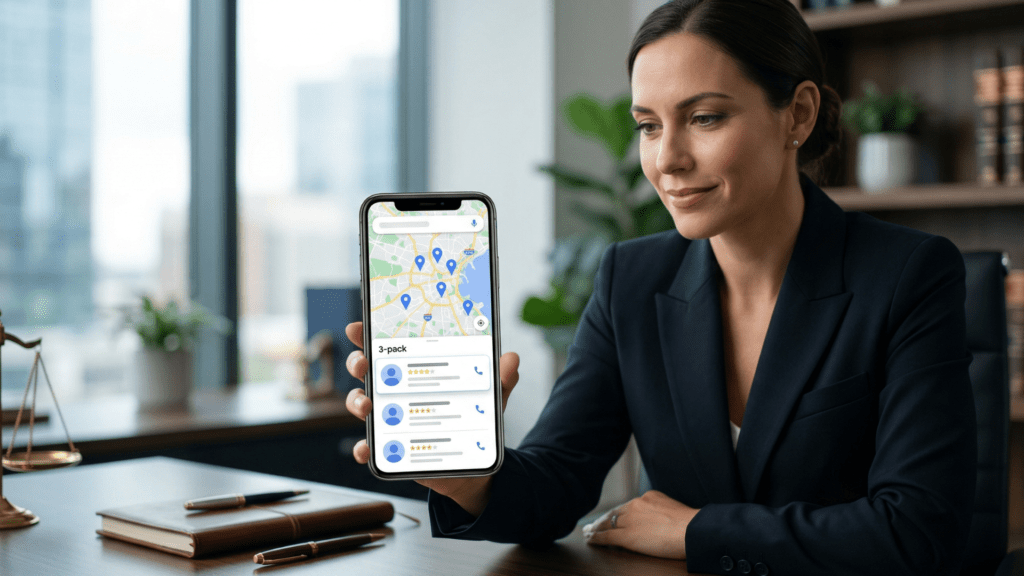
When someone searches for a lawyer near them—whether it’s “criminal defense lawyer near me” or “divorce lawyer in New York”—the first thing they often see isn’t a website. It’s the Google Local Pack. This prominent section at the top of search results showcases a map and three local business listings. The Google Local Pack takes up significant space in the search engine results page (SERP), making it highly noticeable to users. For law firms, appearing in this section can mean the difference between a steady stream of inbound calls… or being completely invisible. Appearing in the Local Pack can help attract more customers by consolidating key information in a prominent position, increasing your chances of being chosen by potential clients. In this article, we’ll break down: What the Google Local Pack is Why it matters for law firms How it works How the Local Pack differs from traditional organic search results and its impact on your online visibility And most importantly, how to rank in it consistently What Is the Google Local Pack? The Google Local Pack (also called the “Map Pack,” “3-Pack,” or “Google Local Map Pack”) is a set of three local business listings that appear in Google search results for location-based queries. It typically includes: A map with pinned business locations Three business listings Business name, reviews, rating Address and phone number Hours of operation A link to the website A “Directions” button These are Google listings and local listings that provide essential contact details for each business, making it easy for users to connect with local service providers. These listings are pulled from Google Business Profiles (GBP), not traditional website rankings. The Local Pack is a prominent feature of local SERPs (search engine results pages) and plays a key role in how users find local businesses. Why the Local Pack Matters for Law Firms 1. It Dominates Above-the-Fold Real Estate The Local Pack often appears above organic search results, meaning users see it first. If your firm isn’t there, you’re losing visibility to competitors—no matter how strong your website SEO is. Ranking in the Google Local Pack can also drive more foot traffic and business in the offline world, as its prominent placement on search engine results pages influences local consumers’ decisions to visit or contact your firm. 2. High-Intent Traffic Searches that trigger the Local Pack are usually high intent, such as: “DWI lawyer near me” “personal injury attorney New York” “family lawyer free consultation” Many of these searches come from mobile users seeking quick solutions, and appearing in the Local Pack can significantly increase local traffic to your firm. These users are actively looking to hire—not just browsing. 3. Calls and Leads Without Website Clicks Users can: Call your firm directly Get directions Read reviews This means you can generate leads without even needing a website visit. 4. Trust Is Built Instantly The Local Pack prominently displays: Star ratings Number of reviews Having a high number of positive customer reviews and positive reviews is a key factor in building trust and significantly improving your chances of appearing in the Local Pack. Online reviews are a critical trust signal for both Google and potential clients. A firm with 4.8 stars and 150+ reviews will almost always outperform a firm with little to no social proof. How the Google Local Pack Ranking Works Google uses three primary factors to determine which businesses appear: Local search ranking is determined by a combination of factors, and a business’s local ranking in the Local Pack can fluctuate based on these. Monitoring your local pack rankings is important for understanding your firm’s visibility in local search results. While many factors influence ranking, there is no way to pay for or request a better local ranking—Google keeps its search algorithm details confidential to ensure fairness. The search algorithm details are proprietary and confidential, so it’s best to focus on proven SEO best practices to improve your business’s local ranking. 1. Relevance How well your business matches the search query. Google considers how relevant your business is to what the user is searching for. This means your business category, description, and services should closely align with the search intent. Using relevant keywords in your business profile and website content helps Google match your business to local search queries. Make sure to include terms that are specific to your local area and target audience to improve your chances of appearing in the Google local pack. 2. Distance How close your business is to the searcher’s location. Google considers your physical location and proximity to the searcher when determining which businesses to display, often showing nearby business listings in the Google Local Pack. 3. Prominence How well-known and trusted your business is online. Prominence is determined by how well your law firm is recognized both online and offline. Google considers factors like the number of reviews, review scores, and your firm’s overall reputation across the web. Including detailed information about the services offered in your Google Business Profile and maintaining well optimized GBP listings can also boost your firm’s prominence in local search results. Consistent citations, quality backlinks, and positive media mentions all contribute to higher prominence, helping your firm appear more frequently in the Google Local Pack. Local Intent and Search Results Local intent is at the heart of how Google delivers relevant results to users searching for services in their area. When a user makes a search query with local intent—such as “divorce lawyer near me” or “estate planning attorney downtown”—Google’s algorithm works to identify businesses that are not only nearby but also closely match the user’s needs. This is where the Google Local Pack comes into play, displaying three local business listings that best fit the search query and the user’s location. For law firms and other local businesses, optimizing for local intent means ensuring your Google Business Profile is complete, accurate, and up-to-date. Your business information—such as address, phone number, business hours, and services—should be consistent across all platforms.

reddit-ads-law-firms
Law Firm Marketing

Reddit Ads for Lawyers: An Underrated Channel for High-Intent Clients

Most law firms are competing in the same crowded digital channels—Google Ads, Facebook, and maybe LinkedIn. Costs are rising, competition is intense, and standing out is getting harder. When it comes to cost effective advertising compared to Google Ads and Facebook, Reddit can help law firms maximize their marketing budgets while still reaching highly targeted audiences. But there’s one platform many firms overlook entirely: Reddit. With over 70 million daily active users and thousands of highly engaged communities (called subreddits), Reddit offers law firms a unique opportunity to reach potential clients earlier in their decision-making process—often before they even search Google. Reddit can also help law firms increase brand awareness by boosting recognition and engagement among targeted audiences. In this guide, we’ll break down: How Reddit Ads work Why they can be effective for law firms The best practice areas for Reddit advertising Campaign strategies that actually convert Mistakes to avoid What Are Reddit Ads? Reddit Ads are paid placements that appear within users’ feeds as they browse subreddits. Advertisers use Reddit Ads to reach specific audiences by leveraging the platform’s robust targeting capabilities and adhering to Reddit’s advertising policies. Unlike traditional social platforms, Reddit is community-driven and conversation-first, where the importance of authentic conversations cannot be overstated. Engaging in discussions and responding to user queries helps foster trust, establish authority, and influence decision-making among community members. Users come to: Ask questions Share experiences Seek advice Vent about problems That last point is where law firms have a major opportunity. People often describe their legal issues on Reddit before they contact a lawyer. Why Reddit Ads Work for Law Firms 1. You Reach Clients Earlier in the Journey On Google, users search: “DWI lawyer near me” “Divorce attorney cost” On Reddit, they post: “I got arrested last night… what should I do?” “Thinking about divorce but worried about my kids…” These are highly emotional, high-intent moments—just earlier in the funnel. If your firm shows up here, you’re not just competing—you’re guiding the decision. Understanding the nuances of your legal field can help tailor your Reddit Ads to better address client concerns at this early stage. 2. Lower Competition = Lower Costs Most law firms are not using Reddit Ads. That means: Lower CPMs Less bidding competition More visibility for your budget Compared to Google Ads (especially in personal injury or criminal defense), Reddit can be significantly more cost-efficient. 3. Highly Targeted Communities (Subreddits) Reddit is organized into niche communities, such as: r/legaladvice r/divorce r/PersonalFinance r/immigration r/dui r/relationships To maximize your campaign’s effectiveness, select subreddits that focus on specific topics directly related to your practice area. This ensures your ads reach users who are already engaged in conversations relevant to your legal services. This allows you to target users based on what they’re actively discussing, not just demographics. 4. Built-In Trust Through Content Reddit users are skeptical of traditional ads—but they respond well to: Honest advice Educational content Transparency Building trust through transparency and authenticity If your ads feel helpful rather than promotional, they can perform extremely well. It’s also essential to avoid misleading claims in your advertising to maintain credibility and comply with legal marketing standards. Best Practice Areas for Reddit Advertising Not every legal niche performs equally well on Reddit. The platform tends to favor emotionally driven or consumer-facing legal issues, such as personal injury, family law, criminal defense, immigration, and consumer protection. Strong Performers: Criminal Defense (DWI, assault, charges) Family Law (divorce, custody, support) Immigration Law Personal Injury Employment Law Weaker Fits: Corporate law Tax law (unless tied to personal issues) Highly technical B2B legal services If your clients are individuals dealing with stressful situations, Reddit is worth testing. How Reddit Ads Work A successful reddit ad campaign starts with a clear ad strategy, which involves setting goals, selecting the right subreddits, and tailoring content to Reddit’s unique audience. Reddit Ads are relatively simple compared to Meta or Google. Targeting Options: Subreddits (most powerful) Interests Location (country, region, city) Device type Ad Formats: Promoted posts (native feed ads) Image ads Video ads Carousel ads No matter which ad format you choose, writing effective headlines is crucial for capturing attention and improving ad performance. Compelling headlines not only engage the Reddit audience but also play a key role in A/B testing and optimizing your campaigns for better conversions. Bidding: CPM (cost per 1,000 impressions) CPC (cost per click) Legal Advertising on Reddit: Compliance and Ethical Considerations Legal advertising on Reddit presents unique compliance and ethical challenges that law firms must navigate to protect their reputation and connect authentically with potential clients. Reddit’s platform is governed by strict advertising rules and community guidelines, which means law firms need to be especially vigilant about the content and tone of their ads. Avoiding misleading claims is crucial—not only to comply with Reddit’s policies but also to adhere to legal advertising standards set by organizations like the American Bar Association (ABA). Reddit Ad Strategies for Law Firms 1. Lead With Education, Not Sales Reddit users don’t respond well to: “Call now for a free consultation!” Instead, try: “Arrested for DUI? Here’s what typically happens next.” Or: “Thinking about divorce? 5 things most people don’t realize.” This positions your firm as a trusted resource, not just another advertiser, and helps your law firm engage with Reddit users more authentically by providing valuable educational content. 2. Match the Tone of Reddit Reddit is informal and conversational. Avoid: Overly polished corporate language Aggressive legal jargon Sales-heavy messaging Use: Plain language Empathy Real-world scenarios 3. Send Traffic to the Right Landing Page Don’t send Reddit traffic to your homepage. Instead, create dedicated landing pages that: Match the ad message Answer common questions Build trust quickly Include a clear next step Feature strong calls to action (CTAs) to guide users toward contacting your firm or booking a consultation Example: Ad: “What to do after a DUI arrest” Landing page: Guide + consultation form 4. Retarget Reddit Visitors Reddit is excellent for top-of-funnel awareness, but not everyone converts

personal injury marketing
Brand Awareness, Law Firm Marketing, Paid Search, Personal Injury, Search Marketing, SEO, Social Media

Top Personal Injury Marketing Tactics for Law Firms: From Awareness to Lead Generation

Marketing a personal injury law firm is not a one-size-fits-all exercise. The most effective strategy depends heavily on the firm’s location, level of competition, case values, and available budget. Law firms spend a significant portion of their marketing dollars—often between 2% and 20% of revenue—to remain competitive in the crowded personal injury marketplace and to maximize ROI. A personal injury practice in New York City, for example, operates in a very different environment than a firm in a mid-sized city or rural market. That said, the most successful firms typically structure their marketing around two core objectives: Awareness – Ensuring potential clients recognize the firm’s brand before they need a lawyer. Lead Generation – Capturing high-intent prospects actively searching for legal help. A balanced strategy combines both. Awareness tactics build trust and recognition over time, while lead generation channels convert that demand into consultations and signed cases. Tracking how marketing dollars are allocated across different channels helps law firms optimize their marketing investment and improve overall campaign performance. Below are some of the most effective marketing tactics personal injury law firms are using today, broken down into these two categories. Introduction to Marketing for Personal Injury Law Firms Marketing for personal injury law firms is a highly competitive and specialized endeavor. Unlike general legal marketing, personal injury lawyer marketing requires a deep understanding of both the legal industry and the unique needs of individuals seeking legal representation after an accident or injury. The goal is to connect personal injury lawyers with those in need of legal services, often at a critical and stressful time in their lives. To stand out, law firms must leverage a variety of marketing channels—both online and offline—to showcase their expertise, build trust, and attract clients. Effective marketing for personal injury law involves a mix of paid advertising, search engine optimization (SEO), social media marketing, content creation, and strategic networking. By utilizing multiple marketing channels, personal injury law firms can increase their visibility, engage with their target audience, and position themselves as the go-to choice for legal representation in personal injury cases. A successful personal injury lawyer marketing strategy is not just about generating leads; it’s about building a reputation for compassion, expertise, and results. This multi-faceted approach ensures that when someone needs a personal injury lawyer, your firm is top of mind. Understanding Personal Injury Clients and Personal Injury Law Personal injury clients are individuals who have suffered harm due to someone else’s negligence and are seeking compensation through legal representation. For personal injury law firms, understanding the motivations, concerns, and emotional state of these clients is essential for effective marketing. Most potential clients are navigating a stressful and unfamiliar process, so demonstrating empathy and a client-centered approach is key to building trust. Personal injury law covers a wide range of practice areas, including car accidents, medical malpractice, workers’ compensation, and more. Each area presents unique challenges and opportunities for law firms to showcase their expertise. Marketing for personal injury requires not only a deep knowledge of these legal areas but also the ability to communicate that expertise in a way that resonates with potential clients. By addressing the specific needs and pain points of personal injury clients—such as the desire for fair compensation, clear communication, and compassionate legal representation—law firms can differentiate themselves and build lasting credibility in the personal injury space. Setting Up a Law Firm Marketing Strategy Developing a successful marketing strategy for law firms begins with a thorough evaluation of current marketing efforts. Start by assessing your firm’s strengths and weaknesses, identifying what’s working and where there’s room for improvement. Next, define clear, measurable goals for your marketing efforts—whether that’s increasing lead generation, expanding your reach to a new target audience, or improving brand recognition. Establishing a realistic marketing budget is crucial. Your budget should support your marketing objectives without overspending, ensuring you can invest in the channels that deliver the best results for your firm. Finally, set up systems to track and measure the results of your marketing strategy. By monitoring key metrics and analyzing performance, law firms can make data-driven decisions, refine their approach, and maximize the return on their marketing investment. A well-structured marketing strategy provides a roadmap for reaching your target audience, generating qualified leads, and growing your personal injury practice. Creating a Brand Identity For personal injury law firms, a strong brand identity is essential to stand out in a crowded market and build trust with potential clients. Your brand identity should reflect your firm’s values, mission, and unique approach to personal injury law. This includes developing a professional logo, a memorable tagline, and a consistent brand voice that resonates across all marketing channels. Consistency is key—whether a potential client encounters your firm on your website, social media, or in a digital ad, the messaging and visual identity should reinforce your expertise and reliability in the personal injury space. Investing in branding services tailored to law firms can help create a cohesive and compelling online presence, making it easier for potential clients to recognize and remember your firm when they need legal representation. A well-defined brand identity not only differentiates your firm from competitors but also positions you as a trusted authority in personal injury law. Awareness Marketing for Personal Injury Law Firms Awareness marketing focuses on visibility and brand familiarity. Most people who eventually need a personal injury lawyer don’t know which firm they will call until the moment an accident happens. Firms that invest in brand awareness dramatically increase the chances that they will be the first name a potential client remembers. Awareness marketing also boosts online visibility, making it easier for potential clients to find the firm when searching online. Trust and familiarity are built over time, and maintaining relationships with existing clients can further enhance brand recognition and generate referrals. Digital Out-of-Home (DOOH) Digital out-of-home advertising includes digital billboards, screens in gas stations, elevators, transit hubs, gyms, restaurants, and retail environments. For personal injury law firms, this channel works particularly well

employment law firm
Employment Law, Google Adwords, Law Firm Marketing, Search Marketing, Social Media

Employment Law Marketing: Top Tactics for Law Firms’ Awareness and Lead Generation

Employment Law Marketing: Top Tactics for Law Firms’ Awareness and Lead Generation Marketing an employment law firm requires a slightly different strategy than other legal practice areas. Employment law cases often involve sensitive workplace issues such as discrimination, wrongful termination, harassment, retaliation, and wage disputes. Many potential clients spend hours on social media and online platforms researching their rights and engaging with content related to legal services before contacting a lawyer, which makes educational content and professional credibility especially important. Employment law practice requires specialized marketing approaches to address the unique needs of clients, making it essential to leverage law marketing strategies tailored for this field. This guide will cover employment lawyer marketing and law marketing strategies specifically designed for employment law practices. Additionally, employment law firms typically target a working professional audience. This means marketing strategies should focus on environments where professionals consume information about their careers, workplace rights, and professional development. In the competitive landscape of employment law marketing, understanding market dynamics, client types, and the contest among firms is crucial for developing effective and ethical strategies. Like most effective legal marketing strategies, employment law firm marketing can be divided into two key categories: Awareness – building brand visibility and trust among working professionals before they need a lawyer. Lead Generation – capturing individuals actively searching for legal help. Below are some of the most effective marketing tactics for employment law firms within these two categories. Introduction to Marketing for Employment Law Firms Marketing for employment law firms is a specialized discipline that requires a deep understanding of both the legal industry and the unique needs of employment law clients. Unlike other areas of law, employment law often deals with sensitive workplace issues, making trust and credibility essential. Effective marketing strategies for employment law firms combine digital marketing, content marketing, social media marketing, and reputation management to reach and engage the right target audience. By leveraging targeted digital marketing strategies, law firms can increase their online visibility, attract more qualified leads, and position themselves as leaders in employment law. These strategies not only help law firms connect with potential clients but also build long-term relationships and establish the firm as a trusted resource for employment law issues. Ultimately, a well-rounded marketing approach enables employment law firms to stand out in a competitive market and grow their practice with confidence. Awareness Marketing for Employment Law Firms Awareness marketing helps position a law firm as a trusted authority on workplace rights. Since many employment disputes develop over time, potential clients may spend weeks or months researching their options before contacting a lawyer. By investing in awareness campaigns, employment law firms ensure that their brand is visible during this research phase. Key marketing channels for building brand visibility include websites, social media, digital ads, videos, articles, and participation in local events. Many firms partner with employment law marketing services to maximize their reach and effectiveness during the awareness phase. Digital Out-of-Home (DOOH) Digital out-of-home advertising allows employment law firms to reach professionals in high-traffic environments throughout major cities. Unlike traditional billboards, digital out-of-home screens appear in a variety of environments such as: Office building elevators Corporate lobby displays Co-working spaces Transit stations Gyms Restaurants Shopping centers For employment law firms, some of the most effective placements include office buildings and business-focused environments. For example, firms can place ads in: Elevators of office towers Lobby screens in corporate buildings Business lounges in major airports These locations are particularly valuable because they reach professionals and business travelers, many of whom are actively engaged in their careers and may be experiencing workplace challenges. Advertising messages can focus on issues such as: Workplace discrimination Wrongful termination Harassment in the workplace Unpaid wages or overtime Because DOOH advertising delivers repeated exposure to professionals commuting to work, it can help position the law firm as a recognized authority on employee rights in the local market. Maintaining consistent branding across all digital out-of-home placements is essential to reinforce recognition and ensure your campaigns remain effective over time. LinkedIn Ads LinkedIn is arguably the most important awareness platform for employment law firms. Unlike other social networks, LinkedIn is a professional platform where users actively consume content related to: Career advancement Workplace challenges Leadership Employment trends Professional development This makes it an ideal environment for employment law firms to distribute educational and career-related content. One of the most effective approaches is to promote gated content, such as: Guides to employee rights Workplace discrimination checklists What to do if you were wrongfully terminated Severance negotiation tips Legal rights for remote workers Salary transparency and wage rights Users who download these resources can provide their email addresses, allowing the firm to build a list of potential employment law clients who may need legal help in the future. LinkedIn also allows firms to target users based on: Job title Industry Company size Seniority level Location For example, an employment law firm may choose to target: Mid-level professionals Corporate employees Technology workers Healthcare professionals Finance professionals Because many employment law cases involve high-income professionals, LinkedIn provides a powerful way to reach the right audience. Targeted LinkedIn campaigns can help firms attract more employment law clients by reaching professionals likely to need legal assistance. Reddit Ads Reddit has become an increasingly valuable platform for reaching people seeking advice about workplace issues. Many Reddit communities focus on topics such as: Workplace conflicts Career advice Labor rights Toxic work environments Salary negotiations Corporate culture These communities often address specific legal concerns related to employment, providing a space for users to seek guidance on nuanced workplace legal issues. Some subreddits regularly feature discussions around issues like: Being unfairly terminated Workplace harassment Wage theft Employment contracts Severance negotiations Reddit Ads allow law firms to target specific communities where these conversations are happening. Unlike traditional advertising platforms, Reddit users tend to respond better to educational or advisory messaging rather than direct promotional content. Effective Reddit campaigns often include messaging such as: “Know your workplace rights.” “What to do if

connected tv ads
Brand Awareness, Law Firm Marketing

Connected TV For Personal Injury Law Firms: A Complete Guide

Personal injury law firms operate in one of the most competitive advertising markets, navigating a highly competitive legal landscape where standing out is essential. Firms compete heavily on platforms like Google Ads, where keywords such as “car accident lawyer” or “personal injury attorney near me” can cost $100–$500 per click in some markets. Because of this intense competition, many personal injury firms are looking for ways to build awareness earlier in the client journey before someone begins searching for a lawyer. Connected TV helps law firms reach a broader audience beyond traditional referrals, expanding their visibility and attracting more potential clients. One of the most powerful ways to do this today is Connected TV (CTV) advertising. While broadcast TV has long been a traditional advertising channel for law firms, Connected TV allows personal injury law firms to deliver high-quality video ads directly to households watching streaming television. This modern form of advertising combines the credibility of television with the targeting capabilities of digital marketing. In this guide, we’ll explain how Connected TV advertising works and why it has become an effective strategy for personal injury law firms. Introduction to Video Advertising Video advertising has rapidly become a cornerstone of effective marketing strategy for law firms, especially those specializing in personal injury law. As consumer habits shift toward streaming services and connected TV, personal injury law firms have a unique opportunity to reach their target audience with engaging video ads. These ads allow law firms to showcase their expertise, highlight real client testimonials, and build a strong brand identity that resonates with personal injury victims. By leveraging video advertising, personal injury lawyers can increase their online presence and generate leads from viewers who may not have considered legal services before. Video content is particularly powerful for establishing trust and credibility, as it enables law firms to communicate their values, share success stories, and demonstrate their commitment to helping clients. With the ability to serve ads directly to households via connected TV and streaming platforms, law firms can ensure their message reaches the right audience at the right time, driving more cases and strengthening their position in the competitive legal landscape. What is Connected TV Advertising? Connected TV refers to televisions that stream content through the internet instead of traditional cable or broadcast signals. This includes: Smart TVs Streaming devices like Roku, Fire TV, and Apple TV Gaming consoles connected to televisions Streaming TV is a key distribution channel for video content, allowing law firms to reach audiences across both digital and broadcast platforms as part of a comprehensive video advertising strategy. When viewers watch content through streaming platforms, advertisements can be delivered within that content. Popular streaming platforms where CTV ads appear include: Hulu YouTube (on TV screens) Roku Channel Amazon Fire TV Peacock Tubi Pluto TV Paramount+ These ads typically appear as 15 or 30 second video spots during streaming shows or movies. Unlike traditional television advertising, Connected TV allows law firms to target specific audiences instead of broadcasting ads to an entire market. CTV provides the same benefits as broadcast TV but with advanced targeting, extended reach, unduplicated audience, and measurable results. Understanding CTV and OTV Advertising For law firms looking to stand out in a crowded legal market, understanding the difference between Connected TV (CTV) and Over-the-Top Video (OTV) advertising is essential. CTV refers to any television device—such as smart TVs, streaming sticks, or gaming consoles—that connects to the internet to stream video content. OTV, or Over-the-Top Video, is the broader delivery of video content over the internet, bypassing traditional cable or satellite providers entirely. By leveraging CTV and OTV advertising, personal injury law firms can deliver compelling video advertising directly to their target audience, reaching potential clients where they are already consuming streaming content. Unlike traditional TV, CTV advertising allows law firms to precisely target viewers based on geographic location, such as specific ZIP codes, as well as demographic and behavioral data. This means your video content can reach households most likely to need personal injury law services, increasing the chances of generating new clients. With advanced audience targeting, law firms can ensure their marketing efforts are focused on the right viewers—those who are most likely to require legal representation after an accident. This level of precision makes CTV and OTV advertising a powerful tool for personal injury law firms aiming to grow their client base and maximize their advertising budget. Why Personal Injury Law Firms Are Investing in CTV Advertising Personal injury law is a trust-based service. Effective marketing strategies are essential for personal injury law firms to communicate their value to potential clients and stand out in a competitive market. Potential clients want to feel confident that the lawyer they hire is experienced, credible, and capable of winning their case. Video advertising on television screens allows law firms to build that trust in ways that text ads cannot. Key elements such as trust, authority, and relatability are crucial for successful connected TV (CTV) campaigns, helping firms establish credibility and connect with their audience. Build Brand Recognition Before Someone Needs a Lawyer Most people do not search for a personal injury lawyer until after an accident occurs. However, when someone already recognizes a law firm from television advertising, they are far more likely to contact that firm after an injury. This phenomenon is known as mental availability. When someone needs legal representation, they remember the law firms they have seen before. Lawyer commercials and personal injury lawyer ads play a key role in creating these memorable impressions, making your firm top-of-mind when a need arises. Effective personal injury lawyer commercials should focus on storytelling and emotional appeal to connect with potential clients, humanize your law firm, and build trust. Connected TV allows law firms to build this recognition efficiently. Reach High-Value Households One of the biggest advantages of Connected TV is audience targeting. With precision targeting, CTV allows law firms to reach the most relevant households by leveraging advanced data to deliver ads to viewers

Scroll to Top