
law firm online advertising

reddit-ads-law-firms
Law Firm Marketing

Reddit Ads for Lawyers: An Underrated Channel for High-Intent Clients

Summary Reddit gives law firms access to interest-based communities and candid conversations, but it behaves differently from search or Meta. This article explains how the platform works, where legal advertisers may find an opportunity and what makes a test credible. It also addresses the risks of poor targeting or overly promotional creative. When Reddit Ads Are Worth Testing When it makes sense: A test makes sense when you can match a real audience need with appropriate content and fund enough learning to assess results. When to reconsider: Reconsider it if you need immediate signed clients from a very limited budget or cannot follow up with early-stage prospects. Review current advertising policies and targeting options before launching. What Are Reddit Ads? Reddit Ads are paid placements that appear within users’ feeds as they browse subreddits. Advertisers use Reddit Ads to reach specific audiences by leveraging the platform’s robust targeting capabilities and adhering to Reddit’s advertising policies. Unlike traditional social platforms, Reddit is community-driven and conversation-first, where the importance of authentic conversations cannot be overstated. Engaging in discussions and responding to user queries helps foster trust, establish authority, and influence decision-making among community members. Users come to: Ask questions Share experiences Seek advice Vent about problems That last point is where law firms have a major opportunity. People often describe their legal issues on Reddit before they contact a lawyer. Why Reddit Ads Work for Law Firms 1. You Reach Clients Earlier in the Journey On Google, users search: “DWI lawyer near me” “Divorce attorney cost” On Reddit, they post: “I got arrested last night… what should I do?” “Thinking about divorce but worried about my kids…” These are highly emotional, high-intent moments—just earlier in the funnel. If your firm shows up here, you’re not just competing—you’re guiding the decision. Understanding the nuances of your legal field can help tailor your Reddit Ads to better address client concerns at this early stage. 2. Lower Competition = Lower Costs Most law firms are not using Reddit Ads. That means: Lower CPMs Less bidding competition More visibility for your budget Compared to Google Ads (especially in personal injury or criminal defense), Reddit can be significantly more cost-efficient. 3. Highly Targeted Communities (Subreddits) Reddit is organized into niche communities, such as: r/legaladvice r/divorce r/PersonalFinance r/immigration r/dui r/relationships To maximize your campaign’s effectiveness, select subreddits that focus on specific topics directly related to your practice area. This ensures your ads reach users who are already engaged in conversations relevant to your legal services. This allows you to target users based on what they’re actively discussing, not just demographics. 4. Built-In Trust Through Content Reddit users are skeptical of traditional ads—but they respond well to: Honest advice Educational content Transparency Building trust through transparency and authenticity If your ads feel helpful rather than promotional, they can perform extremely well. It’s also essential to avoid misleading claims in your advertising to maintain credibility and comply with legal marketing standards. Best Practice Areas for Reddit Advertising Not every legal niche performs equally well on Reddit. The platform tends to favor emotionally driven or consumer-facing legal issues, such as personal injury, family law, criminal defense, immigration, and consumer protection. Strong Performers: Criminal Defense (DWI, assault, charges) Family Law (divorce, custody, support) Immigration Law Personal Injury Employment Law Weaker Fits: Corporate law Tax law (unless tied to personal issues) Highly technical B2B legal services If your clients are individuals dealing with stressful situations, Reddit is worth testing. How Reddit Ads Work A successful reddit ad campaign starts with a clear ad strategy, which involves setting goals, selecting the right subreddits, and tailoring content to Reddit’s unique audience. Reddit Ads are relatively simple compared to Meta or Google. Targeting Options: Subreddits (most powerful) Interests Location (country, region, city) Device type Ad Formats: Promoted posts (native feed ads) Image ads Video ads Carousel ads No matter which ad format you choose, writing effective headlines is crucial for capturing attention and improving ad performance. Compelling headlines not only engage the Reddit audience but also play a key role in A/B testing and optimizing your campaigns for better conversions. Bidding: CPM (cost per 1,000 impressions) CPC (cost per click) Legal Advertising on Reddit: Compliance and Ethical Considerations Legal advertising on Reddit presents unique compliance and ethical challenges that law firms must navigate to protect their reputation and connect authentically with potential clients. Reddit’s platform is governed by strict advertising rules and community guidelines, which means law firms need to be especially vigilant about the content and tone of their ads. Avoiding misleading claims is crucial—not only to comply with Reddit’s policies but also to adhere to legal advertising standards set by organizations like the American Bar Association (ABA). Reddit Ad Strategies for Law Firms 1. Lead With Education, Not Sales Reddit users don’t respond well to: “Call now for a free consultation!” Instead, try: “Arrested for DUI? Here’s what typically happens next.” Or: “Thinking about divorce? 5 things most people don’t realize.” This positions your firm as a trusted resource, not just another advertiser, and helps your law firm engage with Reddit users more authentically by providing valuable educational content. 2. Match the Tone of Reddit Reddit is informal and conversational. Avoid: Overly polished corporate language Aggressive legal jargon Sales-heavy messaging Use: Plain language Empathy Real-world scenarios 3. Send Traffic to the Right Landing Page Don’t send Reddit traffic to your homepage. Instead, create dedicated landing pages that: Match the ad message Answer common questions Build trust quickly Include a clear next step Feature strong calls to action (CTAs) to guide users toward contacting your firm or booking a consultation Example: Ad: “What to do after a DUI arrest” Landing page: Guide + consultation form 4. Retarget Reddit Visitors Reddit is excellent for top-of-funnel awareness, but not everyone converts immediately. Use retargeting on: Google Display YouTube Meta (Facebook/Instagram) Retargeting allows your law firm to expand its reach beyond Reddit, ensuring your brand stays top of mind with potential clients across multiple platforms as they


connected tv ads
Brand Awareness, Law Firm Marketing

Connected TV For Personal Injury Law Firms: A Complete Guide

Summary Connected TV gives personal injury firms television-like reach with digital targeting, but reach alone does not make a campaign effective. This guide explains how CTV fits into a broader awareness and search strategy, what it can and cannot measure, and which planning decisions matter. It helps firms evaluate whether the channel matches their market and budget. When Connected TV Fits the Marketing Plan When it makes sense: CTV makes sense when the firm has suitable video creative, a defined market and enough budget to evaluate awareness over time. When to reconsider: Reconsider it if immediate case acquisition is the only objective or the firm cannot yet capture and follow up with existing demand. Set the test budget and evaluation period before buying media. Introduction to Video Advertising Video advertising has rapidly become a cornerstone of effective marketing strategy for law firms, especially those specializing in personal injury law. As consumer habits shift toward streaming services and connected TV, personal injury law firms have a unique opportunity to reach their target audience with engaging video ads. These ads allow law firms to showcase their expertise, highlight real client testimonials, and build a strong brand identity that resonates with personal injury victims. By leveraging video advertising, personal injury lawyers can increase their online presence and generate leads from viewers who may not have considered legal services before. Video content is particularly powerful for establishing trust and credibility, as it enables law firms to communicate their values, share success stories, and demonstrate their commitment to helping clients. With the ability to serve ads directly to households via connected TV and streaming platforms, law firms can ensure their message reaches the right audience at the right time, driving more cases and strengthening their position in the competitive legal landscape. What is Connected TV Advertising? Connected TV refers to televisions that stream content through the internet instead of traditional cable or broadcast signals. This includes: Smart TVs Streaming devices like Roku, Fire TV, and Apple TV Gaming consoles connected to televisions Streaming TV is a key distribution channel for video content, allowing law firms to reach audiences across both digital and broadcast platforms as part of a comprehensive video advertising strategy. When viewers watch content through streaming platforms, advertisements can be delivered within that content. Popular streaming platforms where CTV ads appear include: Hulu YouTube (on TV screens) Roku Channel Amazon Fire TV Peacock Tubi Pluto TV Paramount+ These ads typically appear as 15 or 30 second video spots during streaming shows or movies. Unlike traditional television advertising, Connected TV allows law firms to target specific audiences instead of broadcasting ads to an entire market. CTV provides the same benefits as broadcast TV but with advanced targeting, extended reach, unduplicated audience, and measurable results. Understanding CTV and OTV Advertising For law firms looking to stand out in a crowded legal market, understanding the difference between Connected TV (CTV) and Over-the-Top Video (OTV) advertising is essential. CTV refers to any television device—such as smart TVs, streaming sticks, or gaming consoles—that connects to the internet to stream video content. OTV, or Over-the-Top Video, is the broader delivery of video content over the internet, bypassing traditional cable or satellite providers entirely. By leveraging CTV and OTV advertising, personal injury law firms can deliver compelling video advertising directly to their target audience, reaching potential clients where they are already consuming streaming content. Unlike traditional TV, CTV advertising allows law firms to precisely target viewers based on geographic location, such as specific ZIP codes, as well as demographic and behavioral data. This means your video content can reach households most likely to need personal injury law services, increasing the chances of generating new clients. With advanced audience targeting, law firms can ensure their marketing efforts are focused on the right viewers—those who are most likely to require legal representation after an accident. This level of precision makes CTV and OTV advertising a powerful tool for personal injury law firms aiming to grow their client base and maximize their advertising budget. Why Personal Injury Law Firms Are Investing in CTV Advertising Personal injury law is a trust-based service. Effective marketing strategies are essential for personal injury law firms to communicate their value to potential clients and stand out in a competitive market. Potential clients want to feel confident that the lawyer they hire is experienced, credible, and capable of winning their case. Video advertising on television screens allows law firms to build that trust in ways that text ads cannot. Key elements such as trust, authority, and relatability are crucial for successful connected TV (CTV) campaigns, helping firms establish credibility and connect with their audience. Build Brand Recognition Before Someone Needs a Lawyer Most people do not search for a personal injury lawyer until after an accident occurs. However, when someone already recognizes a law firm from television advertising, they are far more likely to contact that firm after an injury. This phenomenon is known as mental availability. When someone needs legal representation, they remember the law firms they have seen before. Lawyer commercials and personal injury lawyer ads play a key role in creating these memorable impressions, making your firm top-of-mind when a need arises. Effective personal injury lawyer commercials should focus on storytelling and emotional appeal to connect with potential clients, humanize your law firm, and build trust. Connected TV allows law firms to build this recognition efficiently. Reach High-Value Households One of the biggest advantages of Connected TV is audience targeting. With precision targeting, CTV allows law firms to reach the most relevant households by leveraging advanced data to deliver ads to viewers who are most likely to need their services. CTV campaigns can target viewers based on: Geographic location Household income Age and demographics Online interests Consumer behavior CTV enables targeting at the household and device level using geographic, demographic, and behavioral signals that traditional network TV cannot access. This means personal injury firms can focus their advertising on households that are most likely to

Google Adwords, Law Firm Marketing

Digital Marketing for Legal Firms: What Works in 2026

Summary Legal marketing channels rarely fail in isolation; problems often appear where strategy, execution, intake and measurement disconnect. This guide examines the digital tactics that can matter in 2026 and how they should work together. It helps firms decide what deserves attention without chasing every platform. Google Ads, LSAs, SEO or Referrals: Where Should a Law Firm Start? Start with the gap that limits suitable client acquisition. If the firm needs more relevant inquiries and can fund a focused test, evaluate paid search or eligible Local Services Ads. If useful pages are missing or hard to find, invest in the website and organic visibility. If trusted professional relationships already produce suitable matters, give referral development a clear owner and time allocation. If suitable inquiries already arrive but rarely become clients, review the conversion gaps first. There is no universal first channel or fixed budget split. Choose based on practice area, location, urgency, available cash and the team’s capacity to respond. Compare the Four Starting Options Option When it fits What you fund and prepare When to reconsider Google Search Ads People actively search for your service, and you want to test a defined offer and market. Media, management, a relevant landing page, call/form tracking and timely responses. Results still depend on the auction and conversion quality. The budget cannot support a meaningful test, the offer is broad or suitable inquiries are being missed. Local Services Ads Your service and location are eligible, you can complete Google’s requirements and your team can handle incoming inquiries. Valid-lead charges, profile maintenance, lead review and outcome tracking. Check current eligibility and onboarding requirements. The firm is ineligible, unavailable to respond or assuming that every charged lead will meet its own case criteria. SEO and useful website content The firm needs clearer service pages, stronger local relevance and ongoing discovery through search. Technical improvements, content, maintenance and time to assess progress. Organic traffic has production costs even without a per-click fee. You need a predictable number of clients immediately or are being sold guaranteed rankings. Referral relationships Existing clients or professional contacts understand the work you accept and can make relevant introductions. Time to maintain genuine relationships, communicate the firm’s focus and follow up on inquiries. This comparison concerns relationship development, not paid referral arrangements. A small number of sources creates dependency or the expected introductions cannot support the firm’s growth target. Google explains that LSA availability and requirements depend on the service and location, and that advertisers pay for valid leads. A valid lead is not a guaranteed signed client. Google’s SEO guidance also notes that changes can take time to appear and may not produce a noticeable improvement. Choose a First Move Based on the Firm’s Situation Limited cash and an early-stage practice: make business information, core service pages and contact routes reliable; develop existing relationships before spreading a small budget across paid platforms. A clear service and working intake, but too few suitable inquiries: compare a narrowly scoped Search Ads test with eligible LSAs. Choose the option that can be funded and evaluated using your market and lead-quality data. Referral dependence and weak online visibility: preserve productive relationships while improving the pages people use to verify the firm. Add paid activity only when its goal and budget are clear. Enough inquiries but weak signing results: review matter fit, response, attendance and engagement outcomes before adding another source. A source already produces suitable clients: test a measured expansion while monitoring cost, capacity and collected fees. Social media, video, CTV and digital billboards can support education and awareness where the audience and resources fit. They do not all need to be part of the initial plan. The sections below explain their roles so the firm can add them deliberately. Illustrative Example: A Family Law Firm Choosing Its First Test Hypothetical planning example, not a client result. A family law firm wants more divorce matters in one county. Its service page is clear, calls reach the right person and the team records consultations and signed engagements. The firm could compare local search demand and likely campaign costs with its LSA eligibility, then choose one focused paid test it can fund. It would continue maintaining referral relationships and improving useful service content. It would not need to launch Search Ads, LSAs, paid social and video campaigns simultaneously. If a review instead found frequent missed calls and unassigned forms, its first investment would shift toward contact capture and follow-up. The practice area is the same; the evidence changes the priority. For deeper implementation detail, see the Google Ads guide and the integrated search guide for family law firms. The State of Law Firm Digital Marketing in 2026 Before diving into tactics, it’s important to understand what has changed. Search is no longer limited to Google. Potential clients now ask questions on Google, YouTube, TikTok, Reddit, and AI tools like ChatGPT and Gemini before ever contacting a lawyer. Clients are also far more educated. By the time someone fills out a form, they often already understand their legal issue at a high level. Advertising costs continue to rise, especially in competitive practice areas such as family law, criminal defense, personal injury, and immigration. Understanding your client base is crucial for targeting marketing efforts and attracting new clients, ensuring your strategies are focused on the audiences most likely to engage your firm. At the same time, trust matters more than ever. Reviews, video presence, transparency, and authority heavily influence which firm gets the call. Legal marketing in 2026 is less about volume and more about quality visibility and conversion efficiency. Unlike traditional marketing methods, which cast a wide net, today’s digital strategies allow for more precise targeting and measurable results, helping firms reach the right prospects more effectively. Search Still Matters—But It’s Smarter and Broader Search Engine Optimization is still foundational, but it has evolved significantly. SEO is essential for law firms to improve their visibility in search engine results pages (SERPs), and approximately 96% of consumers use

AI Search, Law Firm Marketing, Search Marketing, SEO

ChatGPT Ads Are Here: What Law Firms Need to Know About Advertising in AI Search

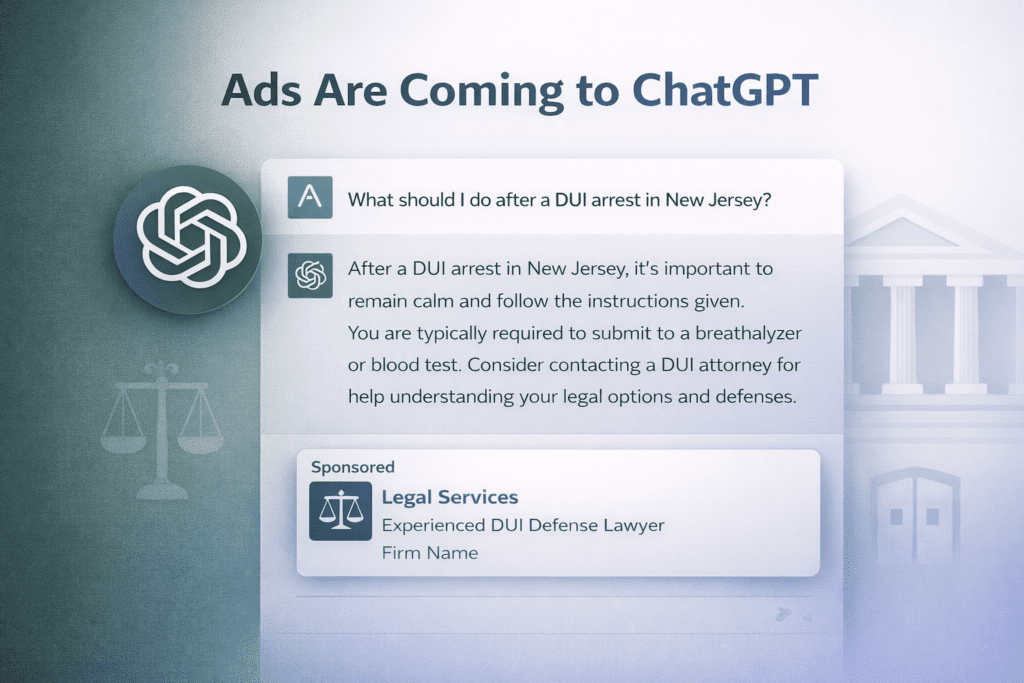
Summary Advertising inside AI-powered search introduces a new discovery channel—and a new set of questions for law firms. This article explains what ChatGPT Ads are, how the experience may differ from traditional search ads and what firms should evaluate before testing. It focuses on readiness, measurement and client fit rather than novelty. When ChatGPT Ads May Be Worth Testing When it makes sense: A test makes sense when the firm has access, a relevant audience and budget beyond its essential acquisition activity. When to reconsider: Reconsider it if results cannot be evaluated or the firm needs predictable short-term client volume. Treat this article as launch-era context and verify current product details before implementation. Who Will See ChatGPT Ads? During the initial rollout, ads will be shown to: Logged-in adult users in the United States Users on the Free and Go subscription tiers Higher-tier plans—including Plus, Pro, Business, Enterprise, and Education accounts—will remain ad-free. ChatGPT’s responses are generated independently and are not influenced by advertisers. OpenAI has stated that it does not sell user chat data to advertisers and that advertisers receive only aggregated reporting. What Are ChatGPT Ads? ChatGPT Ads are clearly labeled sponsored placements that appear below the AI’s response. Ads are not embedded within ChatGPT’s answers, and OpenAI has emphasized a strict separation between AI-generated content and paid advertising. Key characteristics: Ads appear after ChatGPT’s response Ads are contextual, based on the topic of the conversation Ads are limited to non-sensitive topics Paid plans remain ad-free Users may opt out of ad personalization based on chat data and can clear any data used for advertising purposes. Ads will not be shown to users under 18. An educational explanation of the legal process from ChatGPT Followed by a sponsored legal services ad displayed below the response May receive: How This Could Apply to Legal Searches For example, a user asking: “What should I do after a DUI arrest in New Jersey?” This differs from traditional search advertising because ads appear within a conversational research experience, rather than a keyword-based search results page. Why This Matters for Law Firms Legal marketing has consistently followed changes in how people seek information. Increasingly, consumers are using AI systems/assistants to ask questions such as: “Do I need a lawyer for this?” “How does divorce mediation work?” “What happens after a criminal charge?” “Can a xyz record be expunged?” These are early-stage, high-intent questions, and ChatGPT is becoming a common starting point for this type of research. ChatGPT Ads introduce a scenario where: Law firms may appear earlier in the research process Visibility may occur before a user conducts a Google search AI tools begin to influence how law firms are discovered How ChatGPT Ads Differ From Google Ads ChatGPT Ads are not a replacement for Google Ads, but they function differently. Google Ads Keyword-driven Appear on search results pages Often target users who are ready to take action ChatGPT Ads Conversation-based Contextual rather than keyword-triggered Appear during the research and learning phase For law firms, this suggests a potential shift toward earlier visibility, rather than immediate lead capture. Ethics, Trust, and Legal Advertising Considerations Legal advertising is highly regulated, and OpenAI’s ad framework reflects this sensitivity: Ads are excluded from certain sensitive categories Sponsored content is clearly labeled User data is not sold to advertisers Reporting is aggregated, not user-specific Law firms advertising through AI platforms will still need to comply with: Applicable bar advertising rules Restrictions on misleading claims or guarantees Jurisdictional and practice-area limitations This environment favours clear, factual, and professional messaging. Which Practice Areas May See Early Relevance Practice areas that involve frequent educational questions may see relevance earlier, including: Criminal defense Family law Immigration law Estate planning Early-stage personal injury inquiries These areas commonly involve users seeking guidance before deciding whether to contact a lawyer. How Law Firms Can Prepare Even if ChatGPT Ads are not immediately available to most law firms, preparation can begin now. Focus areas include: Creating clear, educational website content Publishing well-structured FAQs and practice area pages Clearly defining practice areas, jurisdictions, and services Emphasizing accuracy and clarity over marketing language These steps support both organic AI visibility and future advertising efforts. What to Measure Through to Signed Clients Record campaign spend, inquiries, lead quality, consultations and signed clients using the measurement options actually available to the account. Reconcile ad-platform reports with intake records and identify gaps. Compare cost per signed client and collected revenue with other tests, allowing time for prospects to make a decision. Your Next Step Discuss whether AI advertising fits your marketing plan.

Law Firm Marketing

Law Firm Web Marketing: What Most Small Firms Get Wrong About Online Advertising

Summary Small firms often copy competitors’ advertising tactics without seeing the system behind them. This article explores why clicks fail to become worthwhile consultations when the campaign, page and intake process are disconnected. It offers a practical way to identify where the client journey is breaking down. Why Small Firms Struggle with Online Ads Most small firms start online marketing by following what they see competitors doing: Google Ads, social media boosts, or directory listings. While these channels can work, they often fail when used without structure. Sending paid traffic to a homepage that does not speak directly to a client’s needs is one of the biggest mistakes. A homepage is usually too broad, it tries to explain everything to everyone. A person searching for a “car accident lawyer near me” or a “divorce attorney available today” wants a clear answer, not a list of every practice area your firm handles. Targeted landing pages, focused on one service and one audience, consistently perform better. Another common issue is neglecting mobile optimization. Many clients search from their phones, especially in urgent legal situations. If your site loads slowly or the contact form is hard to use, the client will leave within seconds. Key Mistakes in Law Firm Web Marketing Understanding where most campaigns go wrong helps avoid costly errors. Below are the most common pitfalls in law firm web marketing and what to do instead. Sending ads to generic homepages. Create specific landing pages for each practice area. Tailor the message and call to action to what the user searched for. Ignoring tracking and analytics. Without tools like Google Analytics or call tracking, you cannot know what works. Measure results and adjust based on real data. Writing ad copy for clicks, not clients. Avoid sensational or vague headlines. Speak directly to the client’s problem and show what happens next. Neglecting reviews and testimonials. Potential clients often look for social proof before calling. Showcase client feedback and ratings to build credibility. Failing to evaluate lead quality. Not every inquiry is a good fit. Track which types of leads actually become clients to refine your targeting and improve your return on ad spend. Having no lead handling process. Many law firms lose cases not because of poor marketing, but because they don’t follow up fast enough. Establish a clear intake process—respond quickly, personalize communication, and ensure no potential client slips through the cracks. By fixing these areas, even small firms with modest budgets can compete with larger players and see measurable returns on their investment. At KJ Strategy Group, we even have an ebook dedicated on how law firms can be efficient in lead generation, you can read it here. What to Measure Through to Signed Clients Track landing-page inquiries, qualified leads, consultations booked and attended, signed clients and total acquisition cost. Review results by campaign and practice area, including reasons inquiries fail to progress. Use click and conversion metrics to diagnose problems while judging success through client outcomes. Your Next Step Review your advertising and conversion priorities.

Scroll to Top